



TechRadar Verdict
The Marshall Stanmore IV is a worthy upgrade, with an enhanced soundstage, improved bass output, and Auracast for multi-room playback. I do wish it had Wi-Fi connectivity for the most seamless, high-quality audio, but the inclusion of LDAC, the speaker’s gorgeous design, and its nifty companion app ensure that it’s still a top option.
Pros
- +
Stunning sound quality with hard-hitting bass
- +
Impressive detail with LDAC
- +
Beautiful, striking design
Cons
- –
No Wi-Fi connectivity
- –
Some may wish for a voice assistant
- –
Visually very similar to its predecessor
Why you can trust TechRadar We spend hours testing every product or service we review, so you can be sure you’re buying the best. Find out more about how we test.
Marshall Stanmore IV review
If you want to invite a speaker that looks as good as it sounds into your living room, then the new Marshall Stanmore IV could be a great pick for you. It aims to deliver everything its predecessor did, but better, with a broader soundstage, enhanced bass, and superior controls.
And as someone who owns (and loves) the previous model in this line, best believe I was expecting big things from the Stanmore IV. Luckily, it delivered, offering up impressive sound, a solid set of features, and an eye-catching design. But is it worth its relatively premium price tag? Here’s what I think after many hours of testing.
But before we decide whether the Marshall Stanmore IV can sit alongside the very best Bluetooth speakers, let’s take a look under the hood. This thing essentially uses the same setup as its sibling, the Marshall Acton IV, but crucially with a larger woofer. That means you’re getting a single 5-inch sub with 60W of amplification alongside two 0.75-inch tweeters with 25W of amplification. The result? Big, commanding, and engrossing sound.
I started by firing up Are You Gonna Go My Way by Lenny Kravitz, and the Stanmore IV handled it masterfully. Wailing electric guitars had excellent tonal accuracy and cut through with clarity; vocals also sounded driven and emotive.
Moving over to a deeper track, like Vision of Love by Lewis Taylor, and the Stanmore IV continued to impress. Deep bass pumping through the track hit with tremendous impact while remaining regimented and clean. But thumping low-end never came at the expense of sounds elsewhere in the frequency range. High-pitched drums sounded expressive and vibrant, while vocals in the mid-range were granted plenty of room to play in. Bass can even reach down to 38Hz, meaning you get brilliant, low extension — even sub-bass comes through with vigor and confidence.
LDAC is also on board now for higher-res Bluetooth listening, which helped to illuminate breathy vocal details in Black Eye by Allie X. And even though I’d argue the speaker has a more energetic sound signature, with a lot of focus on the hard-hitting low end, it still supplies a detailed, nuanced listen.
One of the limitations of the Stanmore IV’s little sibling, the Acton IV was its stereo playback. Although it whipped up a decent impression of stereo sound, its small size made it a little difficult to create the most meaningful sense of separation. But the larger, wider build of the Stanmore IV takes things up a notch, and in Jimi Hendrix’s Foxey Lady I picked up on a stronger sense of separation, with lead guitar brilliantly placed on the right.
And, more generally speaking, the Stanmore IV whips up a broad, engrossing soundstage. Marshall has improved the tweeters and waveguides on this model to help disperse sound more evenly and provide room-filling sound. However the extra width has been achieved, it certainly gets the nod from me.
Marshall’s Dynamic Loudness tech also ensured that tracks maintained admirable clarity, even at higher volumes. Of course, you can still expect a bit of compression at 100%, say, but I was impressed with the speaker’s control in the upper echelons of loudness. The Stanmore IV is even better in this regard than the smaller Acton IV — perhaps thanks to its larger woofer and larger cabinet size.
Overall, the Stanmore IV provides powerful, driven, and exciting sound, with commendable depth and expression. It’s bullish and confident, but still takes time to smell the flowers — and its wider soundstage and refined bass even helps it surpass its already impressive predecessor.
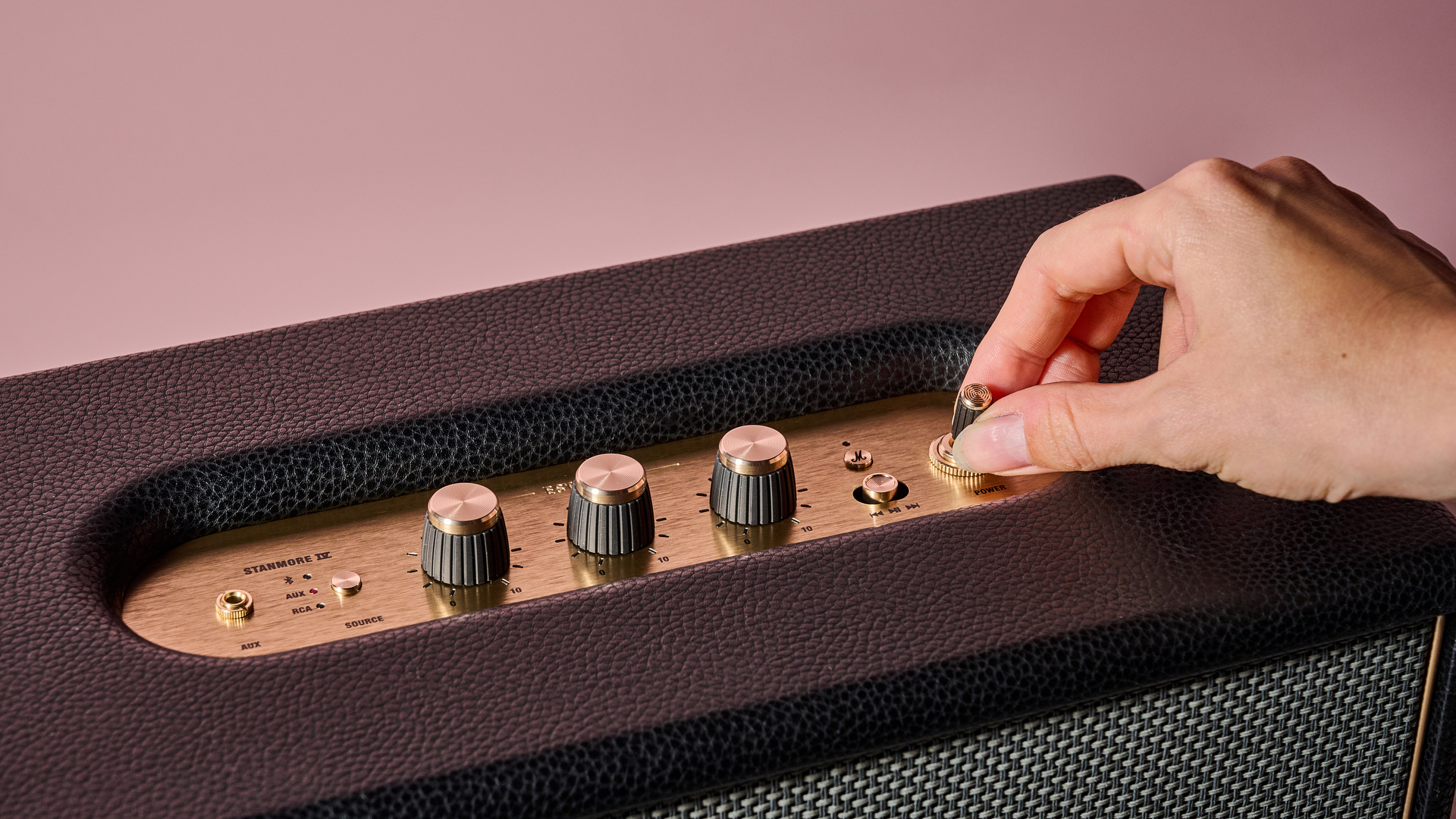
But now it’s time to move on from sound and look at a few of the features you can enjoy on the Stanmore IV. If you’ve already seen my Marshall Acton IV review, then you’ll get the gist of what’s on board. The Stanmore IV uses the newer Marshall app, enabling you to save three EQ calibrations (using a five-band equalizer), and you can use the M button to cycle between these if you like. The app also opens up placement compensation, enabling you to optimize the speaker’s audio output depending on its positioning, and there’s an option to change the brightness of the LED indicators.
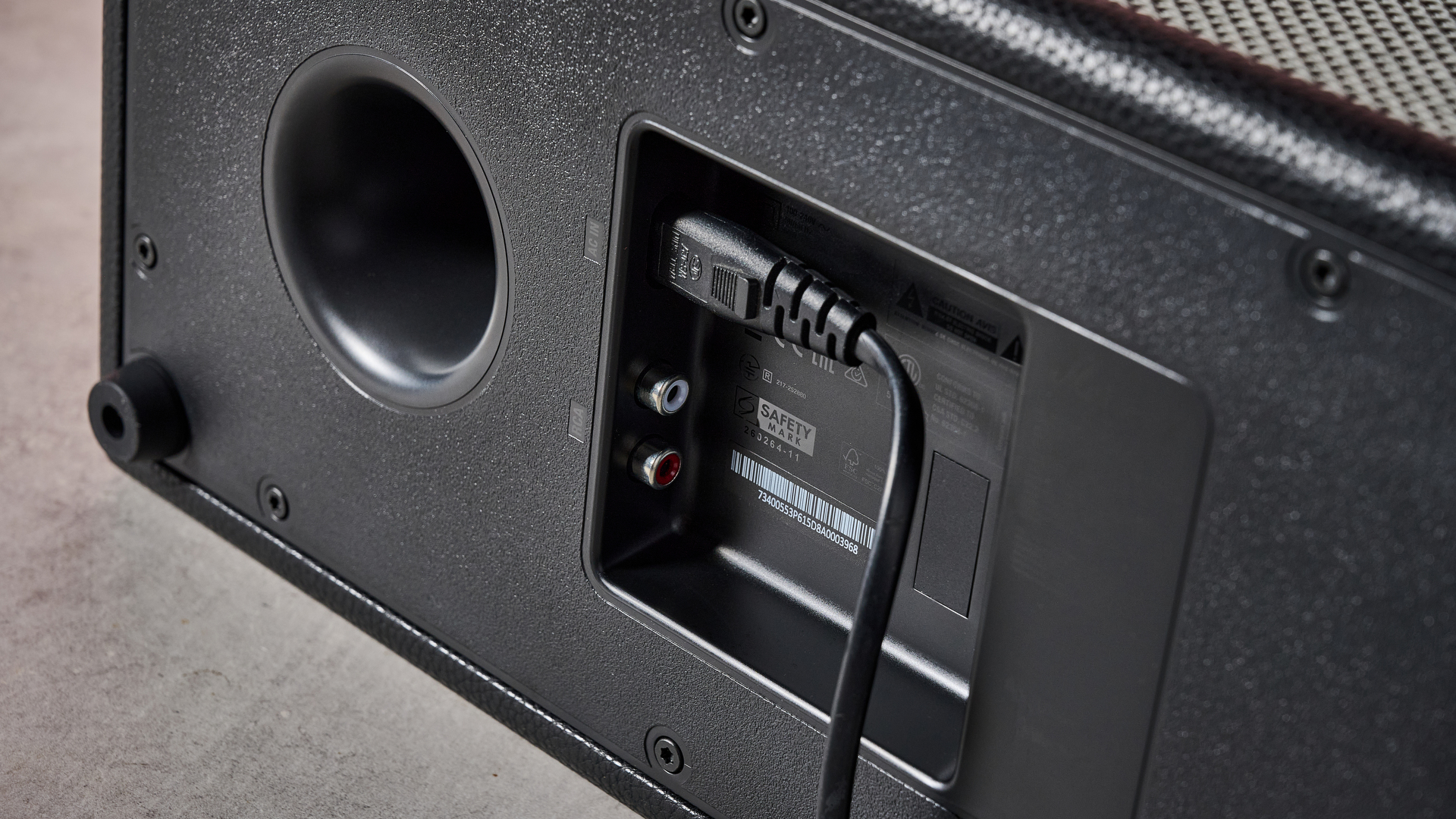
Like the Stanmore III, there’s also RCA and 3.5mm connectivity, allowing you to hook up a turntable, or connect the speaker up to an AUX cable.
Something I wish the Stanmore IV did have is Wi-Fi connectivity. Not only does Wi-Fi provide the highest quality wireless listening experience, but it also prevents pesky sounds from your device — like phone calls and notifications — blasting from the speaker. What’s more, this is a home speaker, so it could easily have a stable connection to your home network at all times.
Marshall has multi-room covered with Auracast tech, which enables a bunch of its speakers to pair together, but I would’ve loved to have seen Wi-Fi onboard for the most seamless, quality-focused listening experience.
Another thing the Stanmore IV leaves out is voice assistant capabilities. Unlike models such as the Sonos Era 100 or Bose Lifestyle Ultra, there’s no smart voice control onboard. Although this is a function that I personally don’t tend to use on speakers, I know that some may wish for it on a model designed primarily for home use.
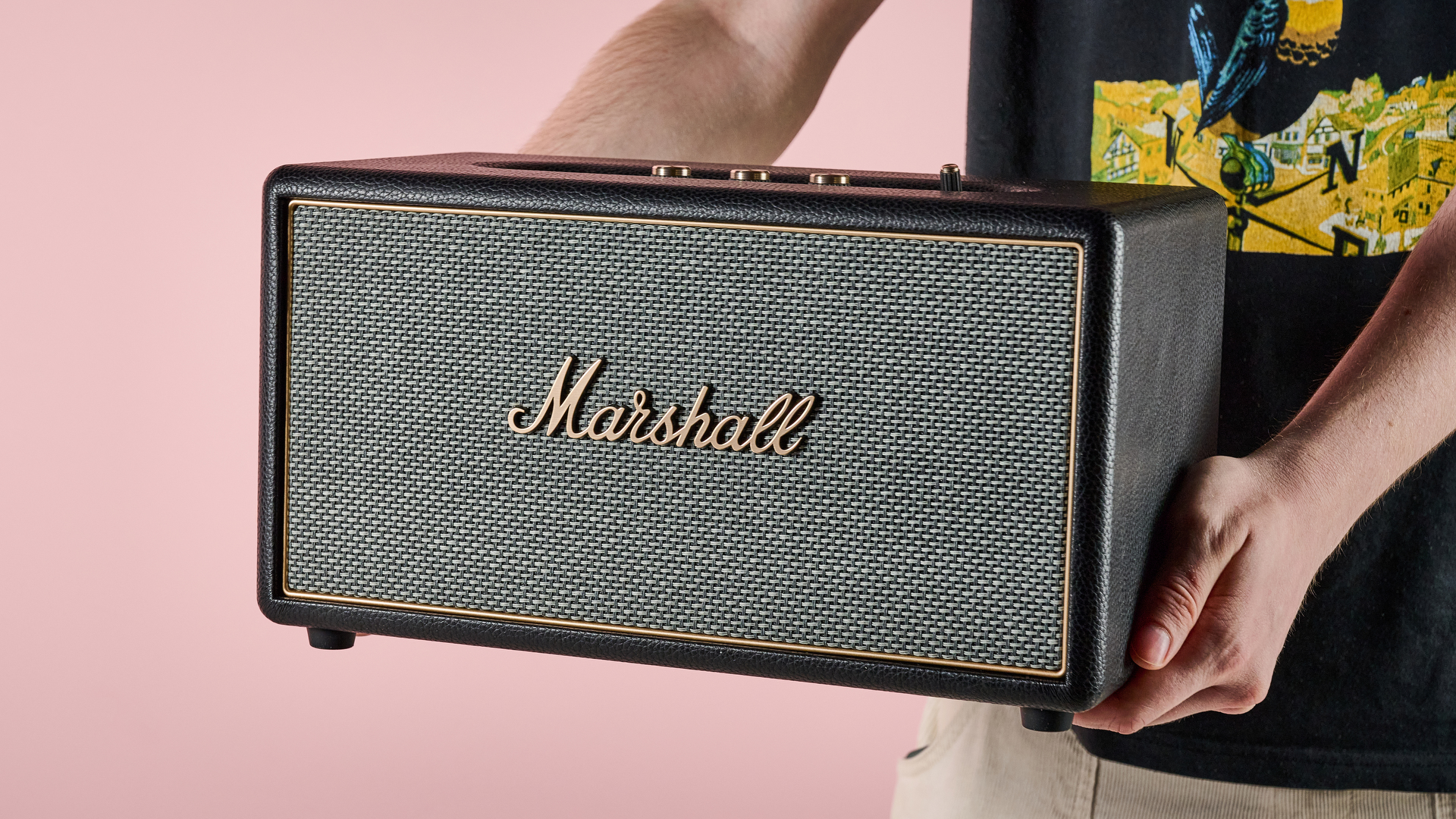
But something that’s sure to be a hit with most is the Stanmore IV’s design. This thing is an absolute beauty, and although it looks very similar to its predecessor, I’d argue that there’s no need to fix something that’s not broken. The new Stanmore stuns with a gorgeous faux leather exterior, beautiful speaker grille, and luxurious golden detailing. It looks like a true statement piece, and an item that will complement any living space (while still producing excellent audio).
As was the case on the Acton IV, buttons and control knobs are also perfectly responsive and pleasing to use, and there are also onboard EQ controls for altering bass and treble levels if you want to make some changes in a pinch.
So, now we come to the big question. Is the Marshall Stanmore IV worth the money? Well, it’s not the cheapest speaker around, with a price tag of $399.99 / £349.99 / AU$679, making it $100 / £90 / AU$180 more than the Acton IV. On the surface, that may seem like a significant jump for a speaker that’s almost identical — bar a larger cabinet and slightly larger woofer. But these seemingly small changes actually make a significant difference, in my view.
It maintains tighter control at the highest volumes, and also produces the seismic sound that Marshall has become associated with. And that’s not to do the Acton down — it’s just to say that I think you get your money’s worth when stepping up to the Stanmore. I’d also say that the Stanmore competes well against rivals in its price category, with a lower price tag yet more might than a rival like the Denon Home 400. I’d also argue it produces a more striking sound than a model like the Sonos Roam 2 — though you do miss out on Wi-Fi and a few smart features.
Overall, the Marshall Stanmore IV is a great speaker that produces energetic, impactful sound, alongside a stunning look and nifty companion app. Yes, I would’ve loved to have seen Wi-Fi on board, but with LDAC for higher-res Bluetooth streaming added into the mix, I’d still happily recommend this musical maestro from Marshall.
Marshall Stanmore IV review: price & release date
- $399.99 / £349.99 / AU$679
- First released July 2026
The Marshall Stanmore IV was released in July 2026, around four years after its predecessor hit the shelves. This newer model launched alongside the Marshall Acton IV, which is — in essence — a smaller version of the Stanmore. This model comes in at $399.99 / £349.99 (AU$580).
Marshall Stanmore IV review: specs
Should I buy the Marshall Stanmore IV?
Buy it if…
You’re focused on getting amazing sound quality
I have to say, the Stanmore IV surprised me by just how good it sounded — even though I already loved its predecessor. Bass is phenomenally powerful yet regimented, mids are driven yet layered, and treble is vibrant yet controlled. Throw in LDAC for higher-res listening and a decently wide soundstage, and you’ve got a great-sounding speaker.
You want a speaker that’s a statement piece
Although the Stanmore IV sounds great, it’s something else that truly helps it to stand out: its design. It maintains that gorgeous amp-inspired aesthetic that’s become synonymous with the Marshall brand, with enticing golden detailing, quality faux-leather casing, and the brand’s iconic logo front a center.
Don’t buy it if…
You’re looking for a portable speaker
When using the Stanmore IV, you’ll need to keep it hooked up to the mains. As a result, it’s better-suited to home use rather than being taken on the road. If you want a more portable option, I’d strongly recommend the Marshall Kilburn III, or awesome non-Marshall alternatives like the JBL Xtreme 5.
You want a smart speaker with Wi-Fi
The Stanmore IV is designed for the home, but it doesn’t have the smart features you’d expect from a rival like Sonos, say. For instance, it leaves out Wi-Fi connectivity (no AirPlay or Spotify connect), which is the most seamless and high-quality way to enjoy music wirelessly. It also leaves out voice assistant compatibility. If those features are important to you, I’d suggest checking out my alternatives below…
Marshall Stanmore IV review: also consider
Sonos Move 2
I’ve used the Sonos Move 2 plenty of times, and I absolutely love it. It plates up gorgeous, detailed audio, alongside seamless Wi-Fi streaming, multi-room capabilities, and convenient voice assistant functionality. It also has a 24-hour battery life, enabling you to take it on the go, and it looks incredibly stylish as well. You can’t ask for much more. Read our full Sonos Move 2 review.
Klipsch The Three Plus
Here’s another stylish speaker that seriously impressed us. Klipsch’s The Three Plus speaker offers assertive and intricate audio, fantastic build quality, and plenty of connectivity options. Read our full Klipsch The Three Plus review.

How I tested the Marshall Stanmore IV
- Spent days testing the speaker
- Used at our dedicated music testing space at Future Labs
- Mainly streamed music over Tidal
I tested the Marshall Stanmore IV over the course of a few days, during which time I listened to hours worth of music and exhausted every feature the speaker had to offer.
Most of the time, I used the Stanmore IV in our dedicated music testing room at Future Labs, where I mainly streamed tunes via Tidal on my Xiaomi 17. To begin with, I sifted through the tracks in our TechRadar reference playlist — which features songs from a wide variety of genres — but I also bumped a bunch of tunes from my personal library.
More generally, I’ve spent years testing audio gear here at TechRadar. I’ve reviewed everything from premium wireless headphones like the Sony WH-1000XM6 through to Dolby Atmos soundbars such as the JBL Bar 1300MK2. I’ve also tested more than 50 Bluetooth speakers, including lots of Marshall models, including the Marshall Middleton II and Acton IV.
- Read TechRadar’s reviews guarantee
- First reviewed: July 2026

Harry is a Senior Reviews Writer for TechRadar. He reviews everything from party speakers to wall chargers and has a particular interest in the worlds of audio and gaming. Harry has a background in business tech journalism, particularly around the telecoms industry.
You must confirm your public display name before commenting
Please logout and then login again, you will then be prompted to enter your display name.