




The PC gaming landscape has changed dramatically in the last handful of years. We’ve seen the slow and steady move away from native (purely rasterized) performance and onto the crutch of AI-powered upscaling technology. Whether Nvidia DLSS, Intel XeSS, or FSR 4, Multi-Frame Generation, or “fake frames”, have become a core part of the experience.
It doesn’t really matter how powerful the best graphics cards are anymore, as AI-powered upscaling has shifted the playable performance expectations across the board. We see this as standard in the system requirements for today’s demanding PC games; it’s a huge asterisk that developers use to claim otherwise unheard of FPS in intensive software.
Are the likes of Nvidia DLSS, Intel XeSS, and AMD FSR just a failsafe to make up for poor software optimization? That’s part of the story, sure, but it’s far more nuanced than that. As computing components become more expensive, and AI muscles its way into the territory in a more aggressive manner, the two, which used to go hand in hand, have now become inherently parasitic in a wanton race to the bottom if things are not course-corrected. Here’s what AI-powered upscaling means for the future of PC gaming.
Nvidia DLSS 5 is the first symptom of a wider issue
I’ve been a champion of DLSS for many years, primarily for how it can boost weaker graphics cards to give users playable framerates. It’s an ever-evolving AI-powered tech that’s continuing to improve and deepen. Some of its best features include Ray Reconstruction, which makes Path Tracing more viable, Frame Generation/MFG, and DLAA for smoother anti-aliasing. When used as an assist to your hardware, it can be the difference between smooth and stuttering, but DLSS 5 is where things simply went too far.
Instead of being a supporting tool, as with DLSS 4.5’s Dynamic MFG, the only thing people can take away from DLSS 5 is how AI is actively impacting image quality, and not for good reasons. Described as a “breakthrough in visual fidelity for games”, and said to bridge the “cinematic gap”, this upcoming AI model uses an algorithm to re-color and overlay motion vectors.
DLSS 5’s showcase of results is troubling to say the least. At best, it slightly improves the lighting in EA FC, and at worst, it completely overwrites the distinct visual art style of PC games like Starfield, Resident Evil Requiem, and Hogwarts Legacy. Sure, the lighting is a little better, but it comes at the cost of a flat and artificial-looking brightness of the entire scene, making everything (ironically) look far more lifeless and void of personality.
Nvidia tends to be the frontrunner that AMD and Intel later catch up to. With the DLSS 5 release date still unconfirmed, but claimed to be coming in the autumn of 2026, we (likely) won’t see the full ramifications of this on the wider gaming industry until next year, but when this glorified AI-filter drops, it’s likely to become an ingrained option in many flagship titles. There’s a reason why Team Green started by showing off some of the largest games from the most well-known publishers and developers in the business; if you enforce it at the top, the rest will follow for fear of being left behind.
The frightening reality of how expensive new graphics cards could be
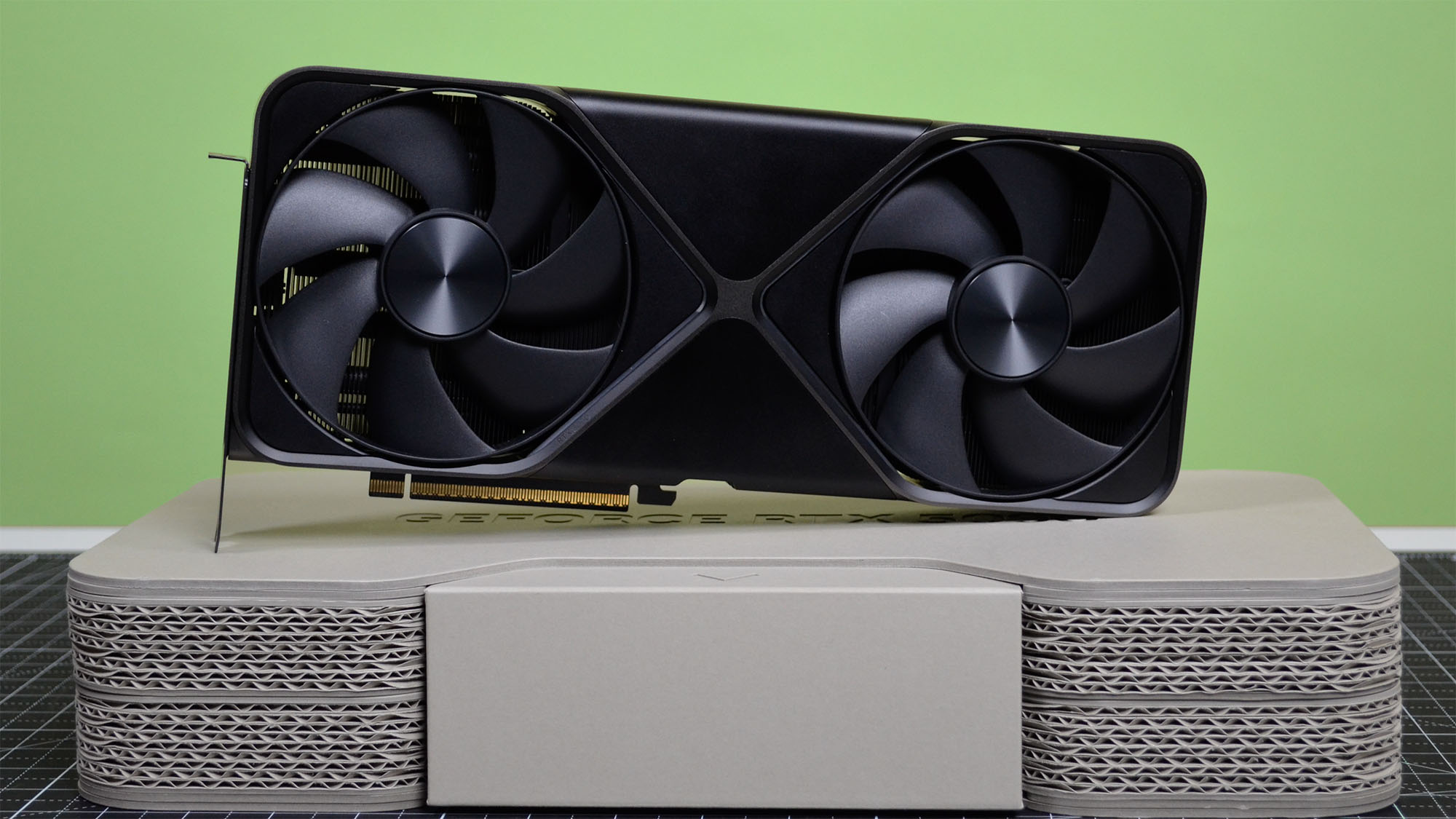
It’s no exaggeration to say that 2026 is one of the worst times on record to build a custom gaming PC. DDR4 and DDR5 RAM prices have skyrocketed due to the global supply of memory modules being drained en masse to build data centers, and the less said about what’s happened to flash memory found in the best SSDs, the better. While these individual components doubling in price overnight is already troubling, there are even worse consequences for graphics cards, made all the more infuriating by the fact that it’s a self-destructive cycle with (seemingly) no end in sight.
Graphics cards rely on VRAM to have enough bandwidth to perform properly. For Nvidia’s current-generation RTX 50 series, that’s the superfast, denser GDDR7, whereas AMD and Intel are still using the slower, older GDDR6 standard. As memory modules are becoming scarcer, it massively drives up the price for core components, such as the Samsung, Micron, and SK hynix memory modules needed to build the video cards in the first place.
Put simply, graphics cards will become more expensive because manufacturers are too busy building data centers with the components, meaning the end consumer ends up paying considerably more. We’ve already seen countless examples of this, such as the Steam Machine’s overpriced nature, the Steam Deck’s price increase, and even how it’s made the PS5 and Xbox Series X more expensive six years in than at launch.
We’ve seen prices of graphics cards increase massively since the semiconductor shortage, which plagued the RTX 30 series launch. You paid more, you got less, and now the manufacturers know they can overcharge you. In a computing landscape where components can shoot up anywhere from 20 to 50% overnight, it puts the reinforced focus on DLSS, XeSS, and FSR as a necessity rather than an optional helping hand.
The future of AI-powered upscaling is a necessity
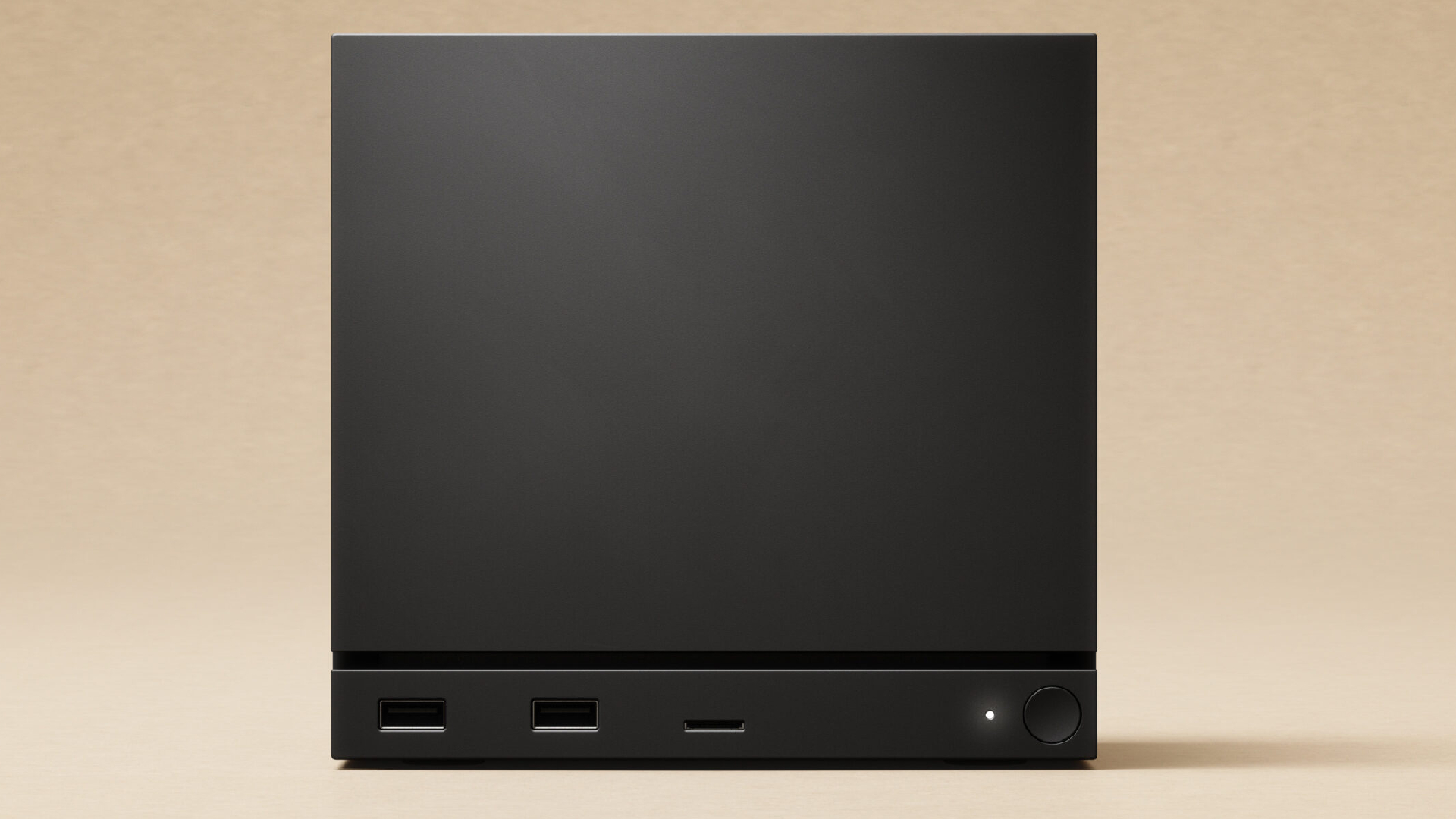
While we’re heading towards more expensive graphics cards that rely on AI upscaling tech just to keep up, we can also look at what the future of DLSS, XeSS, and FSR will need to do to keep up. We’ve already established that DLSS 5 made a contentious call with its AI art filter, but what about real-world, practical uses in 2027 and beyond?
Intel XeSS 3 launched with Multi-Frame Generation, which was rolled out to both its Alchemist and Battlemage graphics cards, even bringing true MFG to handhelds like the MSI Claw 8 EX AI+ and Acer Predator Atlas 8. To look positively at AI-upscaling tech in this regard, its major benefit will be to make handheld gaming PCs, such as a Steam Deck or Lenovo Legion Go S successor, more competitive.
The most recent update to AMD’s AI-powered upscaling tech, FSR 4 Redstone, still trails behind DLSS 4.5, which means Team Red will need to strike back with FSR 5 to have a chance at dethroning Nvidia while it is down. AMD’s image quality is far better than it used to be, even though its frame pacing leaves a lot to be desired. Based on the track record, from what I’ve seen from Intel and AMD, XeSS and FSR look to continue to iterate on the core fundamental technologies, whereas Nvidia is looking to do its own thing in counter to what was expected.
The future of AI upscaling tech becomes two-fold. Ideally, enabling any of these settings should be as normal and natural as turning on TAA (temporal anti-aliasing) and forgetting about it. It’s easy to forget that there was a time when such a setting was contentious, and now it’s almost universally used across the board. It’s a similar story to when Nvidia’s PhysX SDK was pushed so heavily, as it’s now a default setting that’s enabled within game engines as standard.
So, AI-powered upscaling is best when it’s not noticeable. If you’re playing a game and you’re noticing smooth performance and a high average FPS, then it’s doing its job properly. Problems only really arise when that tech tries to overtake the core experience rather than in support of it, and chiefly as a symptom of a wider problem that we’re still experiencing. AI-trained algorithms need data servers; we’re making more of those, which means taking away the resources to build graphics cards, meaning you’ll pay more for them when the Nvidia RTX 60 series, Intel Celestial, and AMD RDNA 5 eventually roll out.
Will native performance ever be relevant again?
I mentioned above about the asterisk of estimated performance when a game’s benchmarks and recommended system requirements go live. Oftentimes, these developer/publisher-approved tables promise 30-60 FPS as standard, and try to discreetly hide that DLSS, FSR, and XeSS are needed to hit that cap. It’s something that Valve is just as guilty of with its somewhat questionable claims of 4K60, which was walked back when using FSR.
When the biggest and most well-known entity in PC gaming makes a move like this, the gaming world takes notice, particularly with who Valve was targeting in the first place. If FSR is essential for playable framerates, then it becomes non-negotiable; a forced standard, an excuse for developers to rush out unoptimized games, which have plagued countless PC ports over the last five years.
We find ourselves at a crossroads then. AI-powered upscaling does just as much harm as it does good; it is simultaneously the answer to (and cause of) a fair amount of the problems we’re currently experiencing as PC gamers, as the benefits and cons constantly battle out for pole position. It looks as though AMD and Intel are on the right track, even if Nvidia is pacing its own trail, one that (hopefully) isn’t followed by its competition. If we’re already expected to pay four figures for a “mid-range” GPU, let us hope that it can perform decently enough.

Follow TechRadar on Google News and add us as a preferred source to get our expert news, reviews, and opinion in your feeds.