

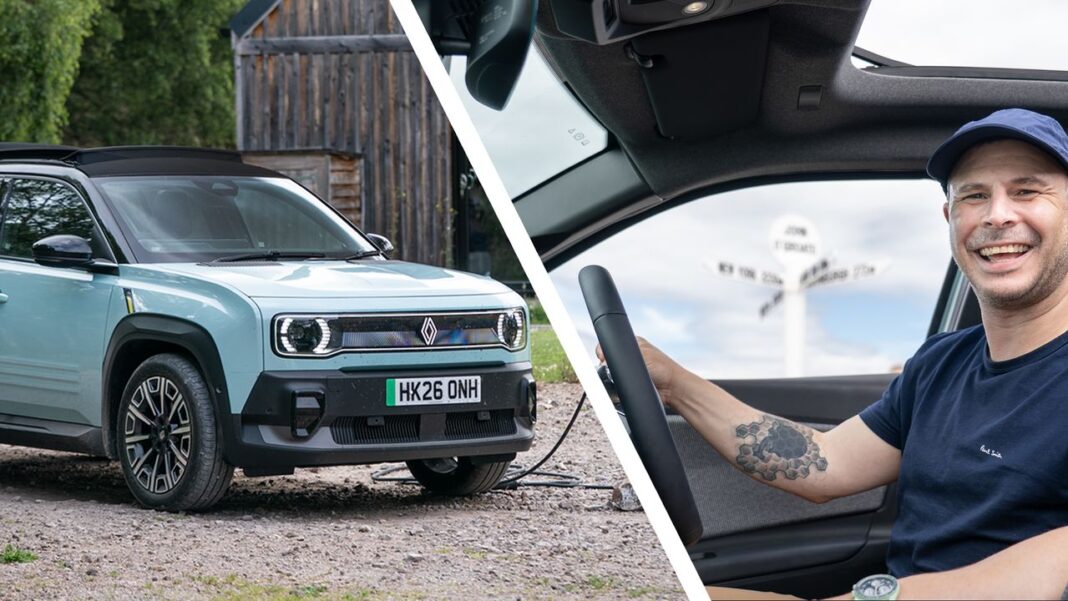

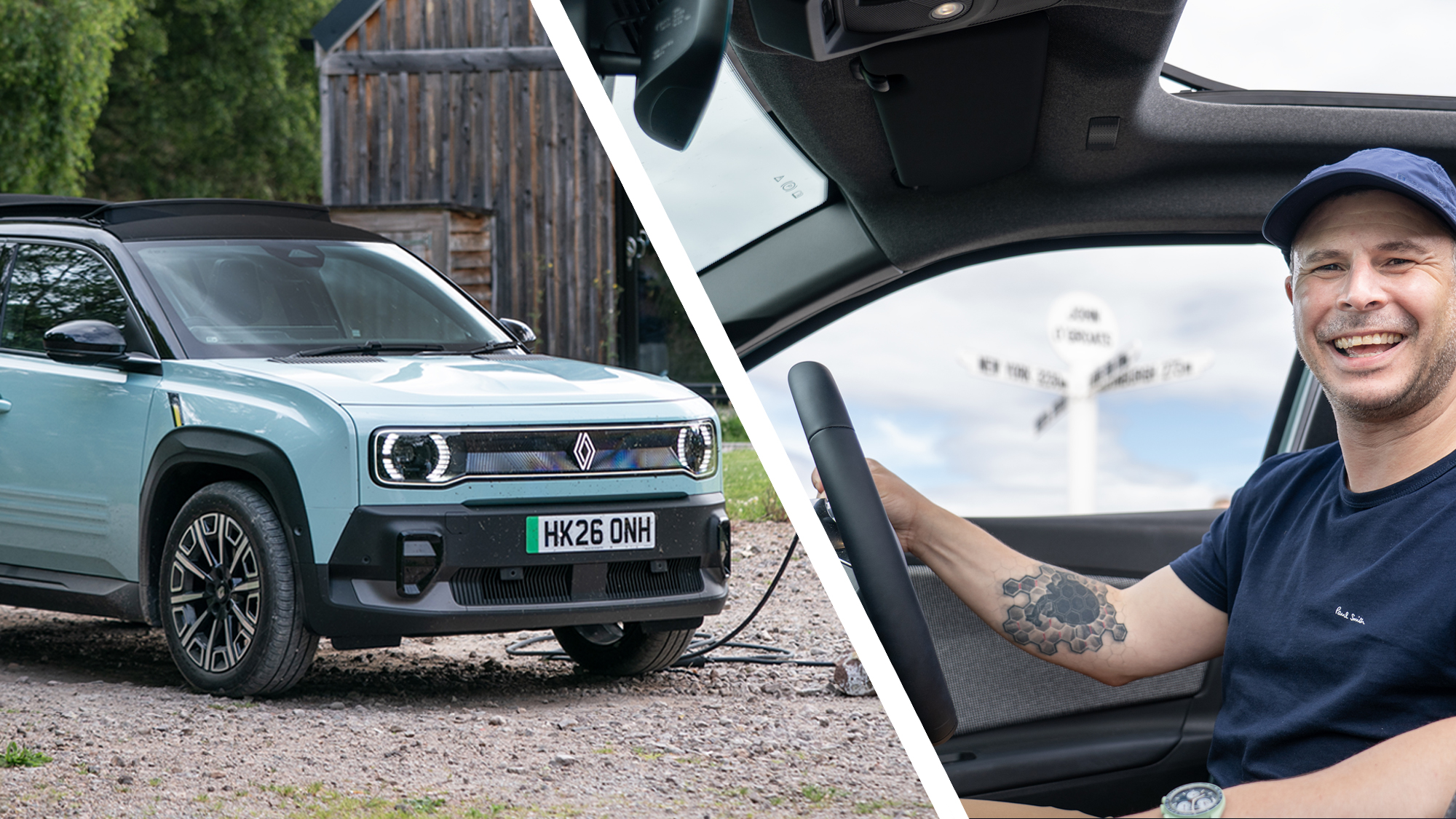
Driving the length of Britain is an expensive endurance test that isn’t overly kind to the environment, but this week I helped do it for free, minus the emissions.
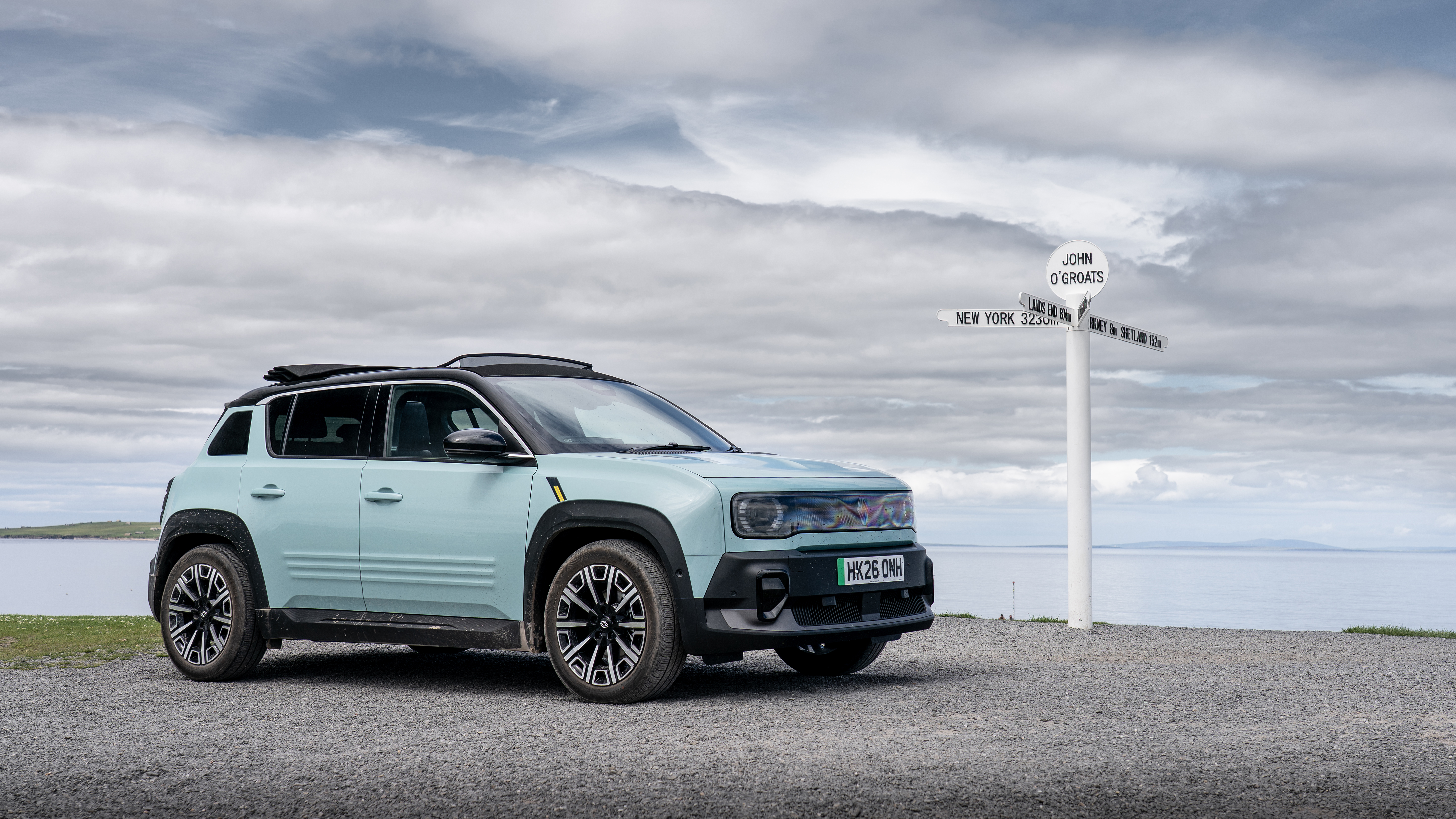
A standard Renault 4, the kind of car parked on any suburban street, has covered the circa 870 miles from Land’s End to John o’Groats without taking a single unit from the grid or burning a drop of petrol. Every electron came from the sun. The same journey in a petrol car works out at £120.48 in fuel (around $160 / AU$230), or £240 there and back (about $320 / AU$460), while the Renault’s bill was nothing.
This was the ‘Easee Sun Run’, a bid to drive a standard production EV the entire length of the country on solar power alone for the first time. The car was the £27,000 (about $36,190 / AU$52,150) Renault 4 E-Tech ‘Plein Sud’ — French for ‘Due South’, and a small in-joke given it was going to be driven very much north. You can order one now, although it carries no solar panels of its own, a fact that baffled onlookers the whole way up.
The charger is an Easee smart charger you can fit at home, while this particular Renault also had a secret weapon. In the boot was a 300kWh battery pack built by OnBio from second-life cells, the sort pulled out of EVs that were damaged before they ever reached a forecourt. Think of it as an oversized power bank for devices thirstier than a smartphone.
Here comes the sun
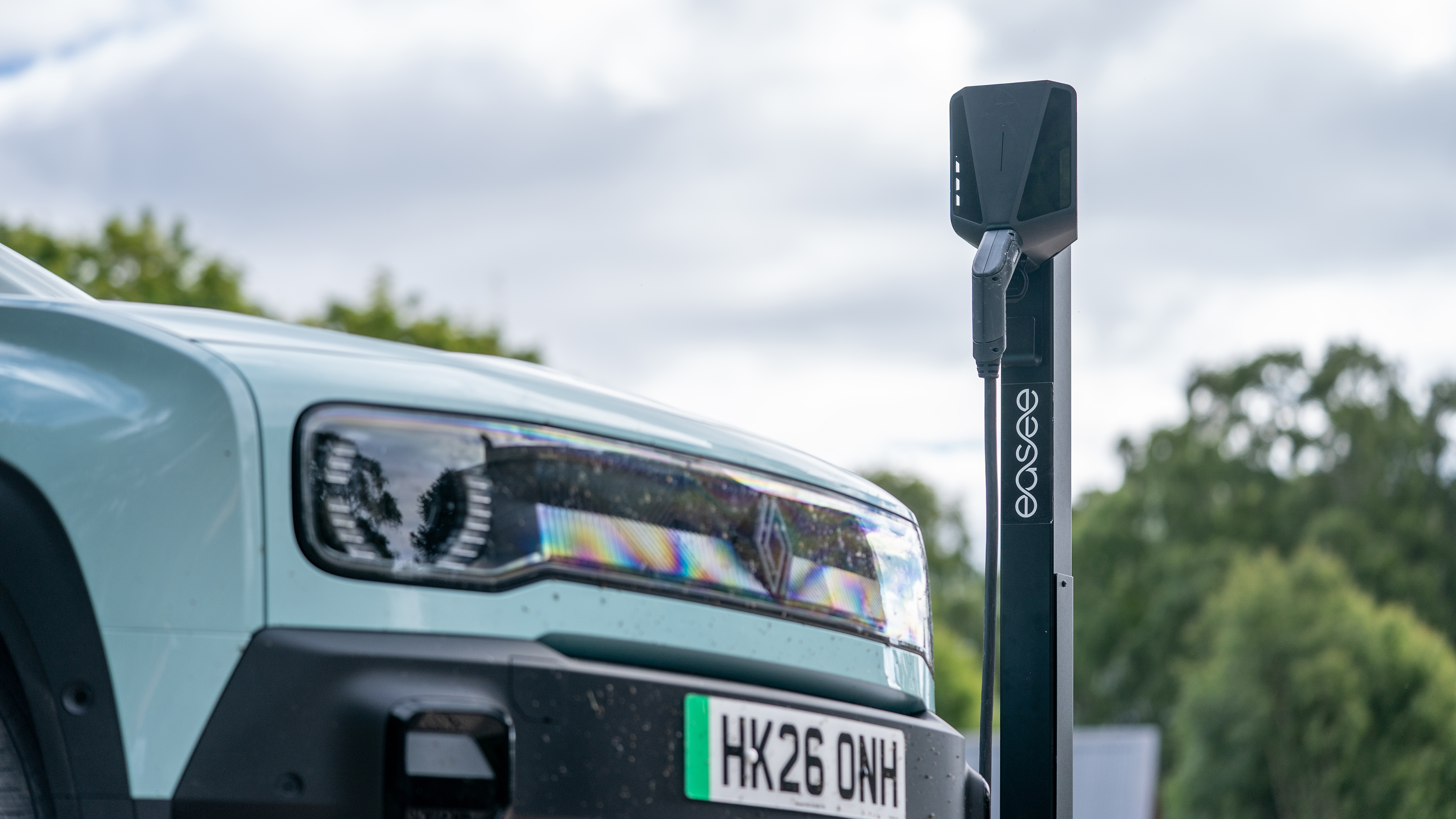
Power Logistics, a firm that normally keeps the lights on at festivals and ‘Trooping the Colour’, spent a week filling it from a solar farm before the off. “All of the energy we’re using is for free,” its director of operations Ian Peniston told me. “It’s from the sun.” Charged up, the pack holds enough to refill the little Renault six times over.
The man who dreamed up the record attempt is Jeremy Hart, an automotive adventurer who has driven a Land Rover to China, crossed America on dirt for sport, and installed the world’s most remote public charger on St Helena.
The idea arrived after finding himself in the Canadian Arctic, charging an EV at minus 40C. If solar worked there, he reasoned, could it work here with the infrastructure we already have? The hard part was never the driving. It was finding solar farms that could promise the power going into the car was from the sun and nothing else, rather than the usual blend that flows off any site wired to the grid.
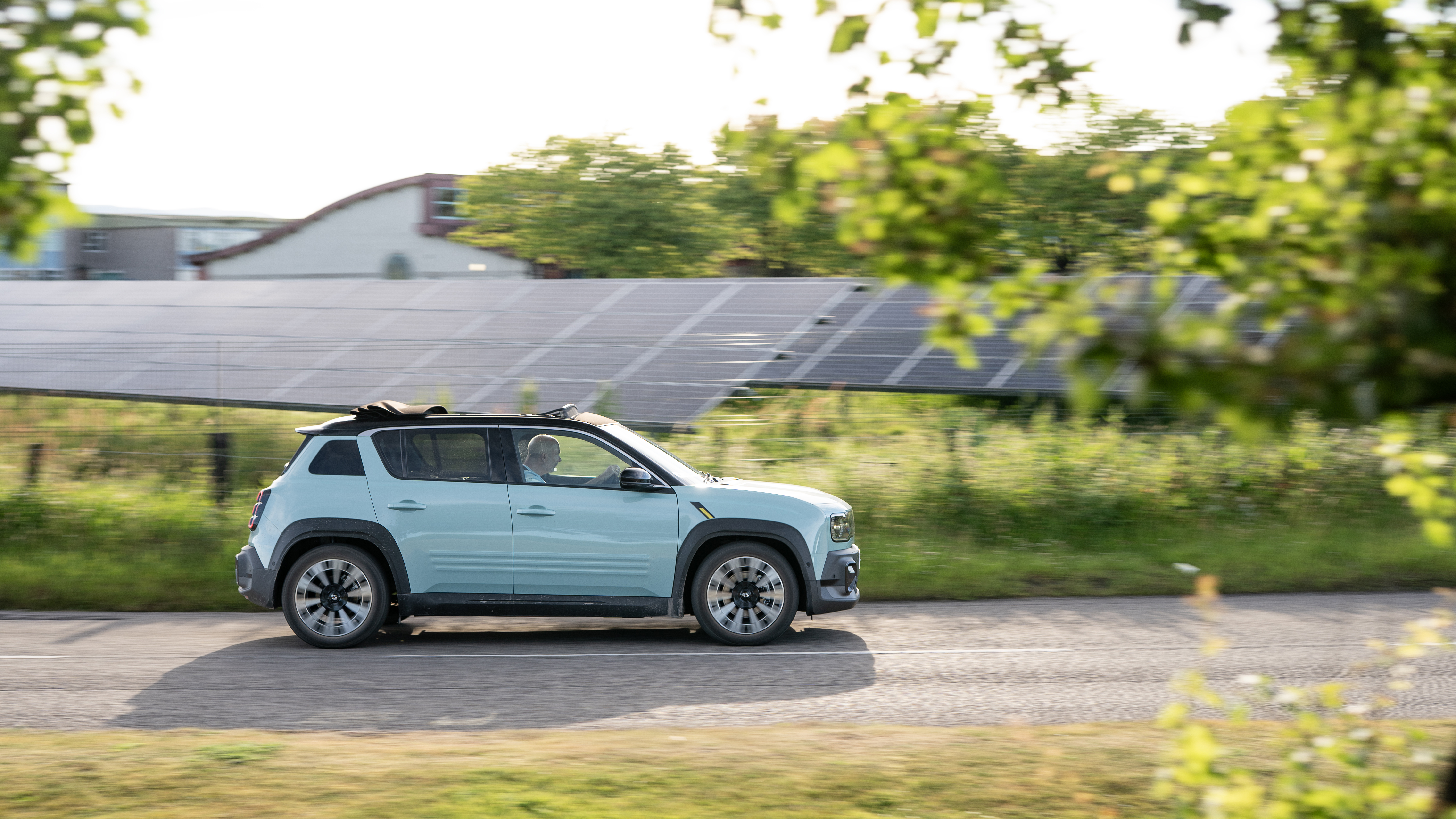
The route doubled as a tour of British solar at work. It began in Cornwall at Roskilly’s, an organic farm and ice-cream parlor that runs on 316kW of panels and sent the car off with a tub of one-off “Easee peasy lemon squeezy” in the back. In Somerset, the convoy called at J B Wheaton & Sons, a haulage firm that laid down the UK’s first commercial solar farm back in 2011, a 3.3MW array it built not to sell power but to wean its own lorries and sheds off a 38,000-liter diesel delivery every fortnight.
Whaley Bridge Cricket Club in the Peak District has run its bar and floodlights on 12kW of roof panels since 2021, proudly solar only. County Durham introduced Power Roll, which prints flexible, crisp-packet-thin solar film off a roll, light enough for the millions of roofs that cannot take the weight of glass and silicon.
Solar system
A few miles from Power Roll, Durham University’s student team rolled out the eighth generation of its solar race car, four square meters of panels feeding a motor that sips 900W, about half a hairdryer.
Hand it the stored charge the Renault used to reach John o’Groats and, on the team’s reckoning, the little racer would make it almost around the world. “We’re a nation of inventors,” Hart said. “The World Wide Web is ours, the jet engine was British. What happens quite often is that those innovations get picked up by other countries and commercialized.” Solar, designed and printed in Britain, is the part he wants to keep here.
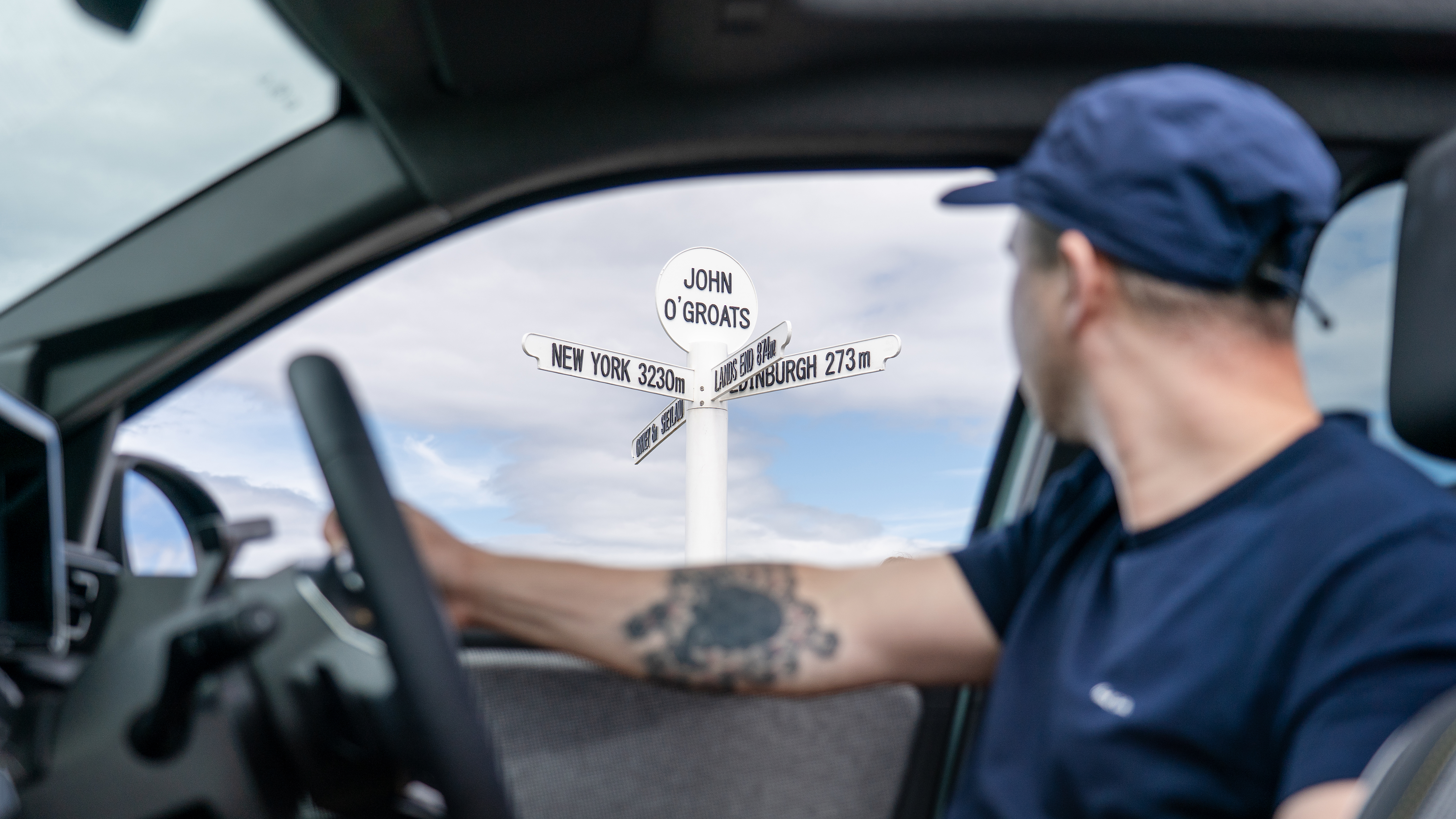
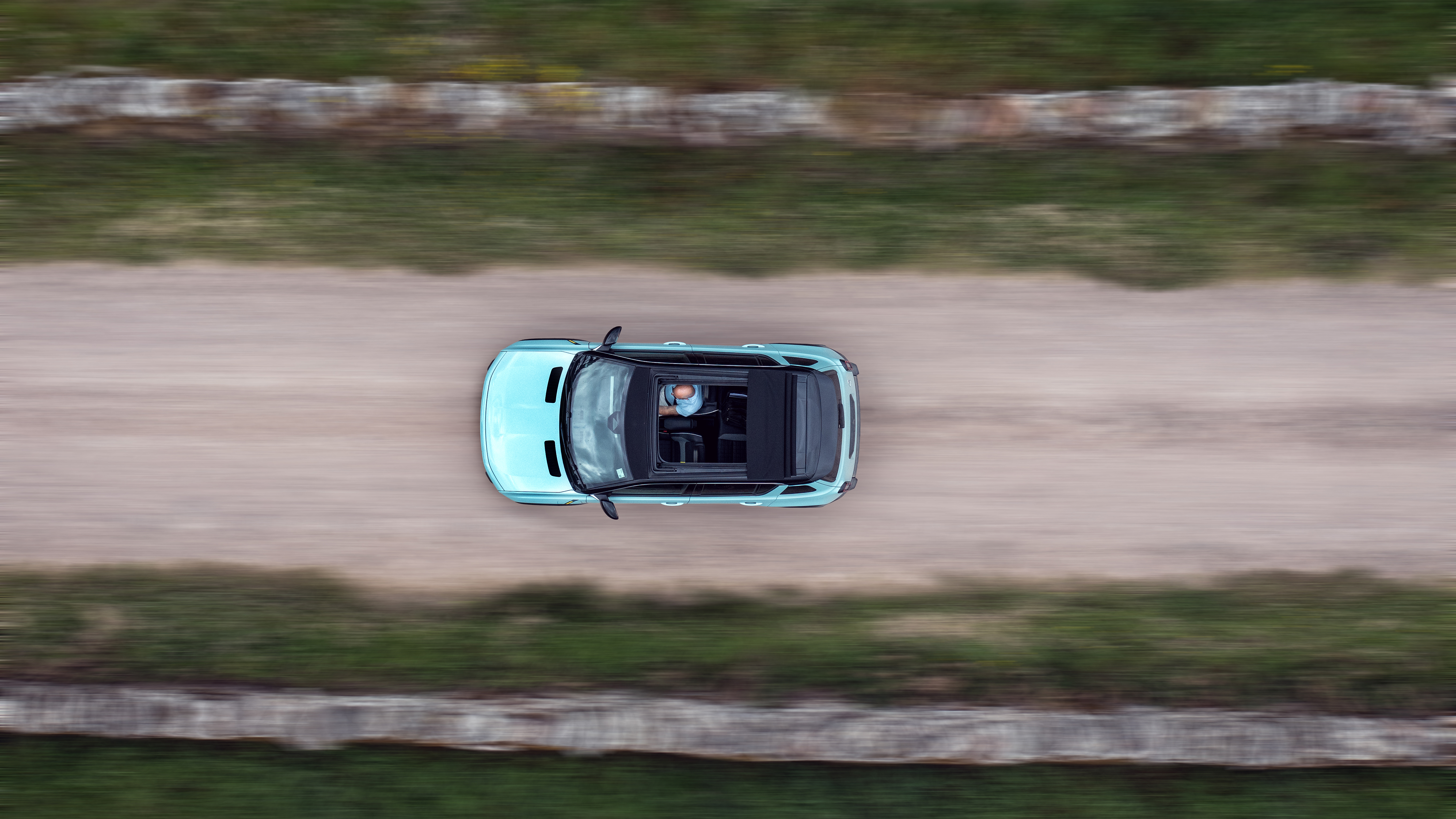
Hellbent on taking some of the glory, I joined for the final leg, Inverness up to the famous signpost at John o’Groats, and took my turn at the wheel. The brief was simple. Eco mode, hold to the limit, drive as you would on the school run. On a red-alert heatwave day, air conditioning running and four grown men aboard, the Renault did not grumble. We sat on a steady 243 miles of real-world range, roughly what Renault quotes, while the team averaged around 200 throughout.
Hart, who has covered the planet looking for motoring challenges, had strangely never driven his own country from top to bottom. “You realize what a beautiful place the UK is,” he said. “It’s only a thousand miles long, but there are some amazing roads. And if you can enjoy them in an EV, that’s good, because otherwise you’re throwing away all the joy of driving.”
Great Scott!
The journey sprang one absurdity. A cattle grid being replaced in Yorkshire sent the team 25 miles out of their way, a fair detour to go around a hole in the road.
The east coast of Scotland, meanwhile, was drenched in sun, and somewhere along it, we even stumbled on a sheep with its head jammed in a stock fence. We stopped, worked it loose, and watched it trot back to two lambs that began feeding as if nothing had happened. At John o’Groats, the welcome was a knot of bemused tourists, some from as far as Hong Kong, and a Czech biker gang, most of them on Harleys, who could not quite take in what the car had just done.
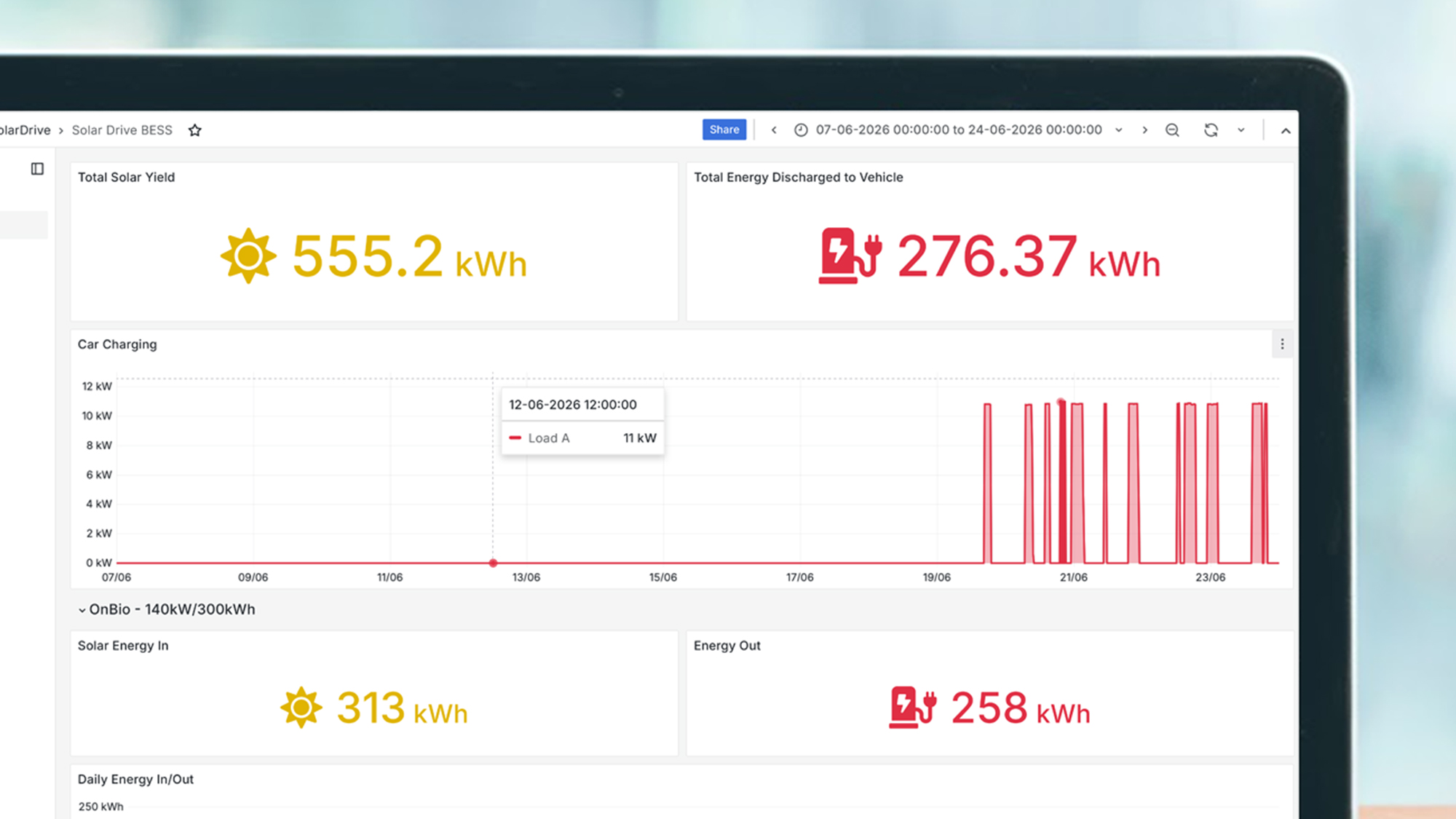
The entire run needed about six full charges at four hours each, so call it 24 hours of charging against the 16 hours of driving the route takes. Over the whole run the car drew 276 kWh, every unit of it solar. The panels gathered 555 kWh along the way, near enough twice what the car used, so there was sun in hand to have turned around at John o’Groats and driven all the way back to Land’s End.
Gaps are also created by charge speed, not range. The Renault accepts a steady 11kW, but it’s short of what Easee’s three-phase charger could push. Do this on a public network, Hart says, and you would win most of that time back. He proved it at the finish, plugging into a 50kW public charger, going for fish and chips, and returning to a full battery.
To keep the record clean, the team set itself a rule. They had to arrive with at least as much charge as they held when they took their first top-up, so nobody could claim a scrap of grid power had crept in before the start. That figure was 20 per cent. We rolled into John o’Groats with 28.
On the first morning in Cornwall, sea fog sat on the Lizard peninsula, the panels barely stirred, and the whole departure hung in the balance until the sun burned through. You notice your dependence on the light when there is no tank to fall back on. The same route in a small petrol car would have put around 78kg of CO2 into the air, more in anything larger. The Sun Run produced nothing worth counting.
What stayed with me while driving through the endlessly spectacular Highlands of Scotland was just how many homes had solar panels on their roofs. If the technology earns its keep in a country that spends half its winter in the dark, it earns it anywhere. Although it is just as well, the record attempt was intentionally scheduled to take place on the summer solstice to maximize daylight.
Electric feel
Gareth Simkins of the trade body Solar Energy UK puts the wider picture into perspective: On one April afternoon this year, solar met 46 per cent of Britain’s electricity demand. A pyramid-shaped office in Edinburgh, visited earlier in the run, generates enough each year to send this Renault end-to-end 135 times.
“Electric vehicles and solar were made for each other,” says Easee’s chief executive, Anthony Fernandez. “I think this journey proves exactly that.” His chief innovation officer, Kjetil Næsje, believes the challenge is to make them “talk better together”, so the power reaching your car is the power you choose.
Full disclosure, you cannot yet pull into a solar farm and fill your boots, and Hart is the first to say so. “It’s not really publicly possible to do what we’ve done yet,” he told me. “But everyone wanted this to work, and I didn’t meet a single person who said ‘This is a bad thing’.” Fit your own panels and a home battery, and you are within reach of charging an EV on sunshine alone.
The run also arrives as the UK government looks to legalize the plug-in solar kits that Germans have hung off their balconies for years, making your chase for the sun that bit easier.
There was a tidy symmetry waiting at the finish. The car reached John o’Groats on the evening Scotland met Brazil at the World Cup, and the village’s 8 Doors distillery had marked the same fixture with a limited 28-year-old single malt, the Seven Sons “Spirit of Brazil”, drawn from a cask filled in 1998 when the sides last met. It sells for £240 (about $320 / AU$460), the same as the petrol we didn’t buy. A fitting prize, collected in person.
Hart has driven to China and across America and feels no need to repeat either. This one he rates differently. Crossing the whole country without paying a penny to move the car, he said, “is bonkers”. Hard to argue, standing at the top of Britain with a full battery, a bottle of whisky, and nothing on the fuel receipt.

Follow TechRadar on Google News and add us as a preferred source to get our expert news, reviews, and opinion in your feeds.