

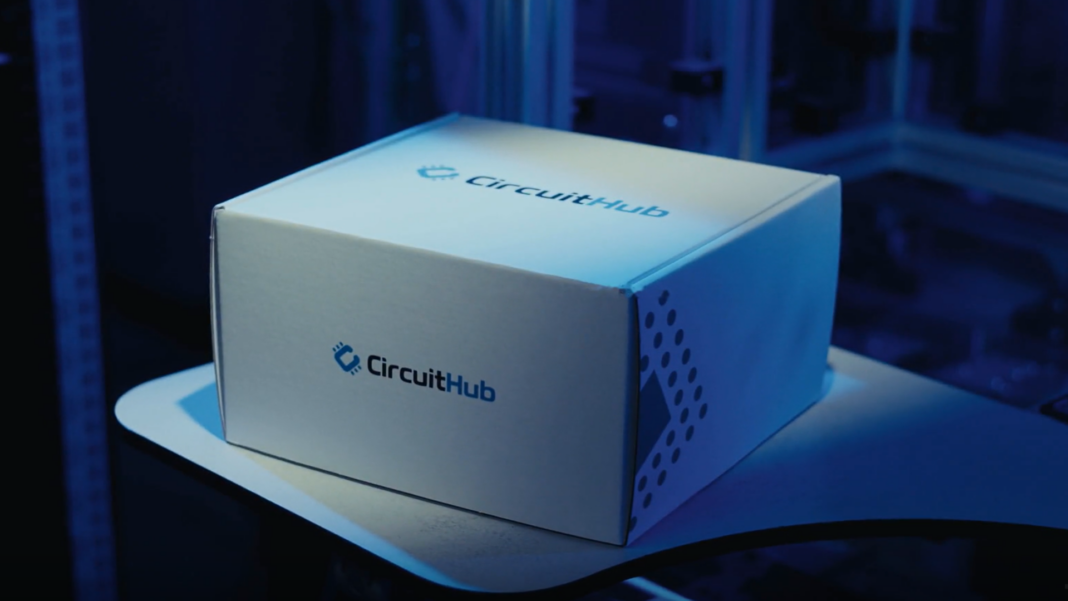

- CircuitHub’s The Grid robotic system moves circuit boards between specialised manufacturing stations
- Each board follows its own route without conventional production-line changeovers
- The Grid handles 100 different designs using shared manufacturing equipment
A Massachusetts factory is using an unusual robotic manufacturing system to produce printed circuit boards for companies requiring different electronic designs.
Developed by CircuitHub, The Grid replaces conventional fixed production lines with coordinated machinery and mobile platforms transporting boards between manufacturing stations.
The company says its system can complete certain orders faster than Chinese competitors.
One large robot manufactures different circuit board designs
CircuitHub describes The Grid as “one large robot,” referring to the co-ordinated equipment responsible for moving and processing individual circuit boards.
Levitating transport platforms carry boards between stations performing solder paste application, component placement, heating, soldering and automated inspection.
Machine learning models, AI agents and conventional optimization software coordinate these operations, determining how equipment handles individual manufacturing assignments.
Unlike conventional assembly lines, the system does not require factories to reorganise their production arrangements whenever another circuit board design enters manufacturing.
Each board follows its own route through the facility, allowing different products to undergo manufacturing simultaneously without conventional production-line changeovers.
CircuitHub says an order containing 100 different designs can therefore be processed as easily as producing 100 copies of one design.
The same equipment handles experimental prototypes and larger manufacturing batches, eliminating the need for separate machinery dedicated to different production stages.
This arrangement addresses the requirements of hardware developers ordering limited quantities of electronics for testing, research, manufacturing tools and product development.
CircuitHub says its customers include a major electric vehicle manufacturer, a leading artificial intelligence laboratory and established technology companies.
Grid delivers faster but is more expensive
CircuitHub compared its factory with a typical quick-turn manufacturer in Shenzhen, China, using an example involving five assembled motor-controller boards.
Each four-layer board contained 118 components, representing 38 distinct component types, with manufacturing, component costs, and delivery included.
In its illustration, producing the five boards through The Grid costs $630, with delivery to a United States address taking four days.
The equivalent Shenzhen order costs approximately $465 after shipping expenses and United States import tariffs, with median delivery taking nine days.
The American factory therefore charges approximately $165 more, although customers receive their completed circuit boards five days earlier.
CircuitHub argues that the shorter delivery period gives engineering teams additional time to continue development rather than waiting for foreign manufacturing.
However, this comparison comes from CircuitHub and concerns one particular order, rather than independently established performance across different manufacturers.
The company says The Grid has operated commercially for five years, generating tens of millions of dollars in annual electronics manufacturing activity.
Across its operations, CircuitHub reports delivering more than 2.2 million circuit boards, installing over 150 million components and serving 26,000 engineers.
Despite this operating history, the company says incoming orders already exceed the factory’s current manufacturing capacity.
“Demand is already well ahead of what we can build. This year we will 5x capacity, with another big jump coming in 2027,” CircuitHub said in a blog post.
“The longer-term goal hasn’t changed since we started: make building hardware as fast as designing it.”

Follow TechRadar on Google News and add us as a preferred source to get our expert news, reviews, and opinion in your feeds.