


TechRadar Verdict
The Stream 5000 is EcoFlow’s worthy successor to the Ultra X. It packs 5 kWh of storage into a smaller-than-expected unit, accepts up to 5,000W of solar, and delivers up to 3,000W of AC power. It also costs less per kWh than the Stream Ultra X. The catch is that it is not a plug-in kit and requires an electrician for installation.
Reasons to buy
- +
5 kWh of capacity at a lower cost per kWh than the Ultra X
- +
Four MPPT inputs that accept up to 5,000W of solar
- +
Up to 3,000W AC output, with installer sign-off or a Stream Gateway
- +
Ten-year warranty and a claimed 10,000 cycles
- +
Mixes with older Stream units, for up to 90 kWh in total
Reasons to avoid
- –
Needs professional installation
- –
Heavy at 45.4 kg
- –
Not a whole-house backup system
Why you can trust TechRadar We spend hours testing every product or service we review, so you can be sure you’re buying the best. Find out more about how we test.
EcoFlow Stream Ultra X: 30-second review
The Stream 5000 is the second generation of EcoFlow’s modular Stream family. It follows the Ultra X I reviewed not long ago. Except that in many ways this is a very different proposition.
The Ultra X was sold on a plug-and-play promise. In the UK, that promise came with small print, and had the rug pulled from under it just before the regulations changed. The Stream 5000 drops the pretence, making it a home battery designed for professional installation, and its price reflects that.
Inside is a 5 kWh battery, a hybrid inverter and four MPPT solar trackers. Each tracker takes up to 1,250W, so the total solar input reaches 5,000W. That is two and a half times the Ultra X. This unit can output up to 3,000W of AC power once an approved installer signs it off or it is connected to a Stream Gateway. That is enough for a washing machine, a dishwasher and a tumble dryer, though not all at the same time.
Where the previous Stream hardware came in five different flavours, with the Ultra X at the top, this generation has boiled it down to just two options. The Stream 5000, reviewed below, and the Stream 5000 AC. The main difference is that the Stream 5000 has four MPPT inputs for solar, while the AC model omits them but keeps the same battery capacity and inverter. You can add extra battery capacity to both in 5kWh chunks. The Stream 5000 and extra batteries stack physically to connect seamlessly, rather than using an external cable like the previous design.
EcoFlow says you can combine the new units with earlier Stream products to reach up to 90 kWh, if you have somewhere to store that many devices.
The app does the thinking, as before. It watches tariffs, weather and usage, then decides when to charge and when to discharge.
The only disconcerting part is that the Ultra X and the 5000 came out about a year apart, which makes me wonder what they’ll release this time next year.
That thought aside, the Ultra X was a brilliant piece of hardware that EcoFlow continues to sell, but for a modest amount more, the Stream 5000 goes that extra mile.

EcoFlow Stream 5000: Price & availability
- How much does it cost? £1,599 early bird, for the Stream 5000. £1,499 for the Stream AC 5000
- When is it out? Available now across most of Europe
- Where can you get it? EcoFlow official website and selected European retailers
EcoFlow launched the Stream 5000 with early-bird pricing, which is still active.
In the UK, the Stream 5000 is £1,599, and the Stream 5000 AC is £1,499, which is only £100 more than the launch price of the Ultra X, which had less battery capacity than either of these new batteries.
In Germany, the Stream 5000 starts at €1,399, and the AC version is €1,299.
The maths is where this gets interesting. At £1,599, the Stream 5000 works out at about £320 per kWh. The Stream AC 5000 comes in under £300 per kWh. My Ultra X costs £1,599 for 3.84 kWh, or about £416 per kWh. The smaller Stream Ultra, at £799 for 1.92 kWh, is exactly the same cost per kWh as the Ultra X.
So the bigger battery is the better buy, even if that is not always the case with premium kit.
Extra batteries cost £1299, and each adds the same 5kWh as the base units.
Competition is thin at this size. The Anker Solix Solarbank 4 E5000 Pro is the same capacity solar input and price in the UK and Europe. It stacks like the Stream 5000, but the maximum capacity is 40 kWh.
At the other end of the spectrum is the Tesla Powerwall 3, which offers from 13.5 kWh up to 54 kWh, though installed prices start at around £7,000.
A cost not included in EcoFlow’s headline price, and it applies to all these products: the electrician. Retrofit installs of home batteries are often quoted in the thousands, though a unit this size should come in well under that if you have a relatively recent consumer unit.
- Value: 4 / 5
EcoFlow Stream 5000: Specs
Swipe to scroll horizontally
|
Category |
Spec |
|---|---|
|
Battery capacity |
5 kWh (LFP) |
|
Max AC output |
3,000W (installer sign-off or Stream Gateway needed) |
|
Solar input |
5,000W max (4 x MPPT, 1,250W each, 60V max) |
|
Max charging power |
4,000W (Stream AC 5000: 3,000W) |
|
AC charging input |
3,000W |
|
Expandable capacity |
Up to 90 kWh (with previous generation Stream units) |
|
Cycle life |
Up to 10,000 cycles |
|
Claimed lifespan |
Up to 15 years |
|
Warranty |
10 years |
|
IP rating |
IP65 |
|
Low temperature charging |
Activated below 10°C |
|
Noise level |
30 dB maximum |
|
Dimensions |
295 x 489 x 298 mm |
|
Weight |
45.4 kg (Stream AC 5000: 44.6 kg) |
|
Connectivity |
WiFi, EcoFlow app, Gateway for larger systems |
EcoFlow Stream 5000: Design
- Heavy but more compact than before
- Battery and microinverter in one
- Application controlled
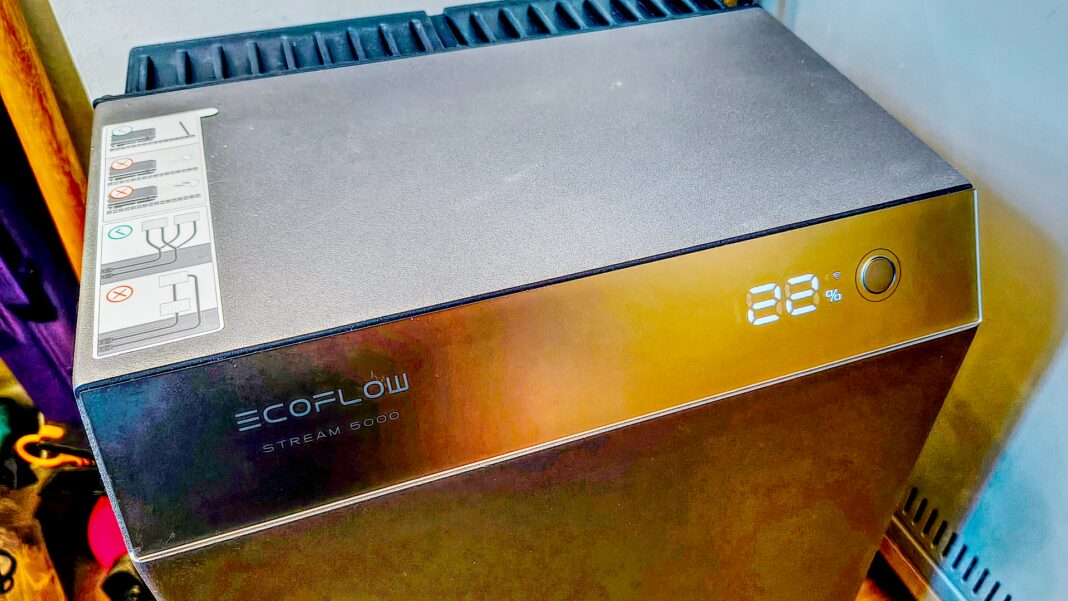
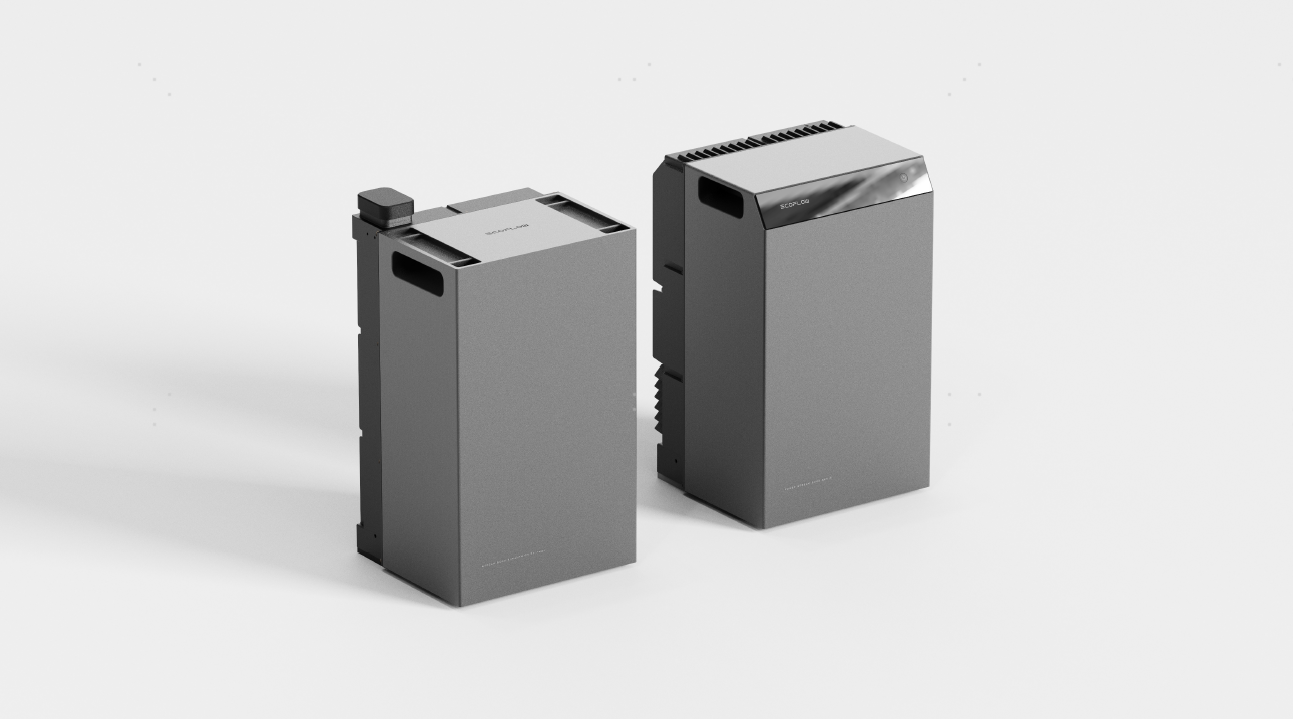
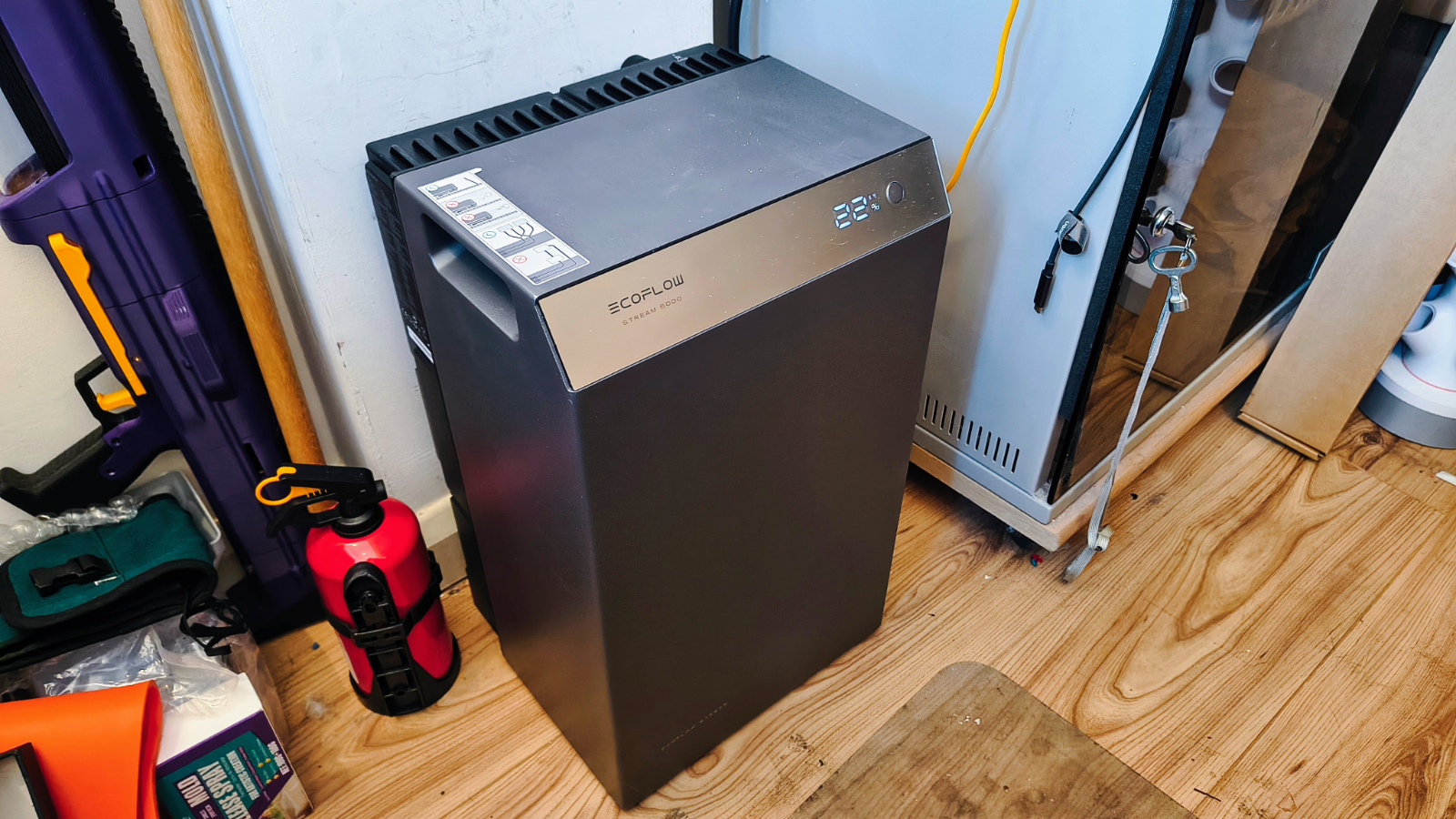
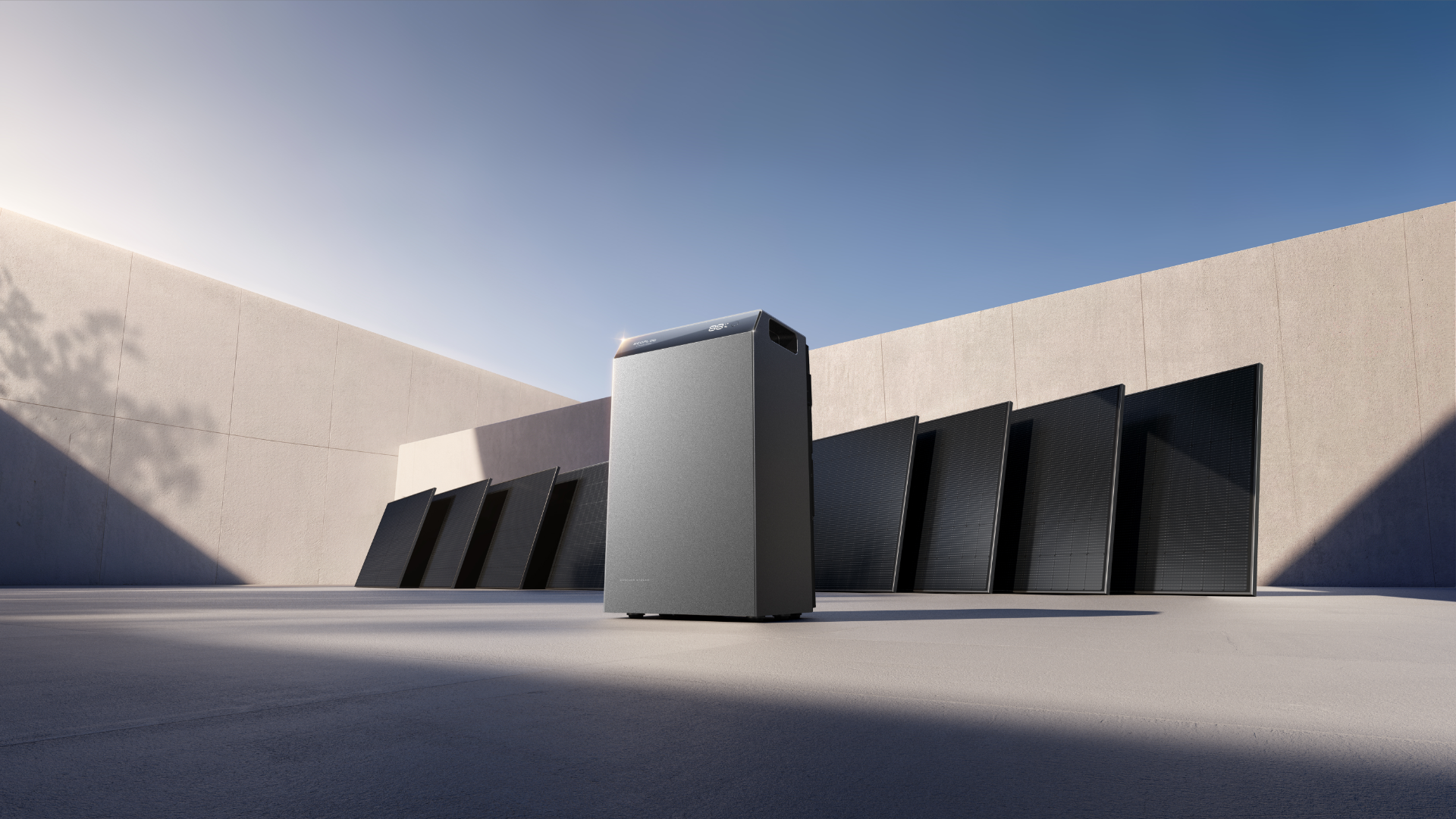
The Stream 5000 follows a new, refined, and functional look. The curved black-and-silver plastic panels of the first Stream generation are gone, replaced by a metal exterior that is undoubtedly more resilient and noticeably more compact.
At 295 x 489 x 298 mm, it is physically smaller than the Ultra X, which measured 420 x 294 x 460 mm. By my sums, that is about 43 litres against 57 litres, even though the Stream 5000 holds 30 per cent more energy. EcoFlow claims it is up to 40 per cent smaller than comparable home batteries, but it’s also a good bit heavier too.
The Stream 5000 weighs 45.4 kg, or a fraction over 100 imperial pounds. That is 6.6 kg heavier than the Ultra X, and I thought that unit needed two people to easily move it.
One annoyance is that the cardboard box it arrives in has hand slots to help you lift it, but they aren’t remotely strong enough, and using them will undoubtedly tear the box.
Personally, I’d keep a dolly handy to move the box to where you intend to deploy it, especially if you are working alone or waiting for help to get it out of the box.
The unit has handholds that can withstand use, but extraction from the box is much safer with a second person around.
Like the Ultra X, the Stream 5000 is IP65 rated. That means it resists dust and water jets from any direction. A label on top suggests that, instead of just dumping it outside, you need a small lean-to roof above the battery for the heaviest deluges, which seems sensible.

My view is that for the winter, you definitely want this unit inside, if only to warm the room it lives in when it gets warm while charging. Conversely, in the summer, outside might be better.
If the weather gets exceptionally cold, when the polar vortex comes to visit, typically batteries don’t do well below certain temperatures.
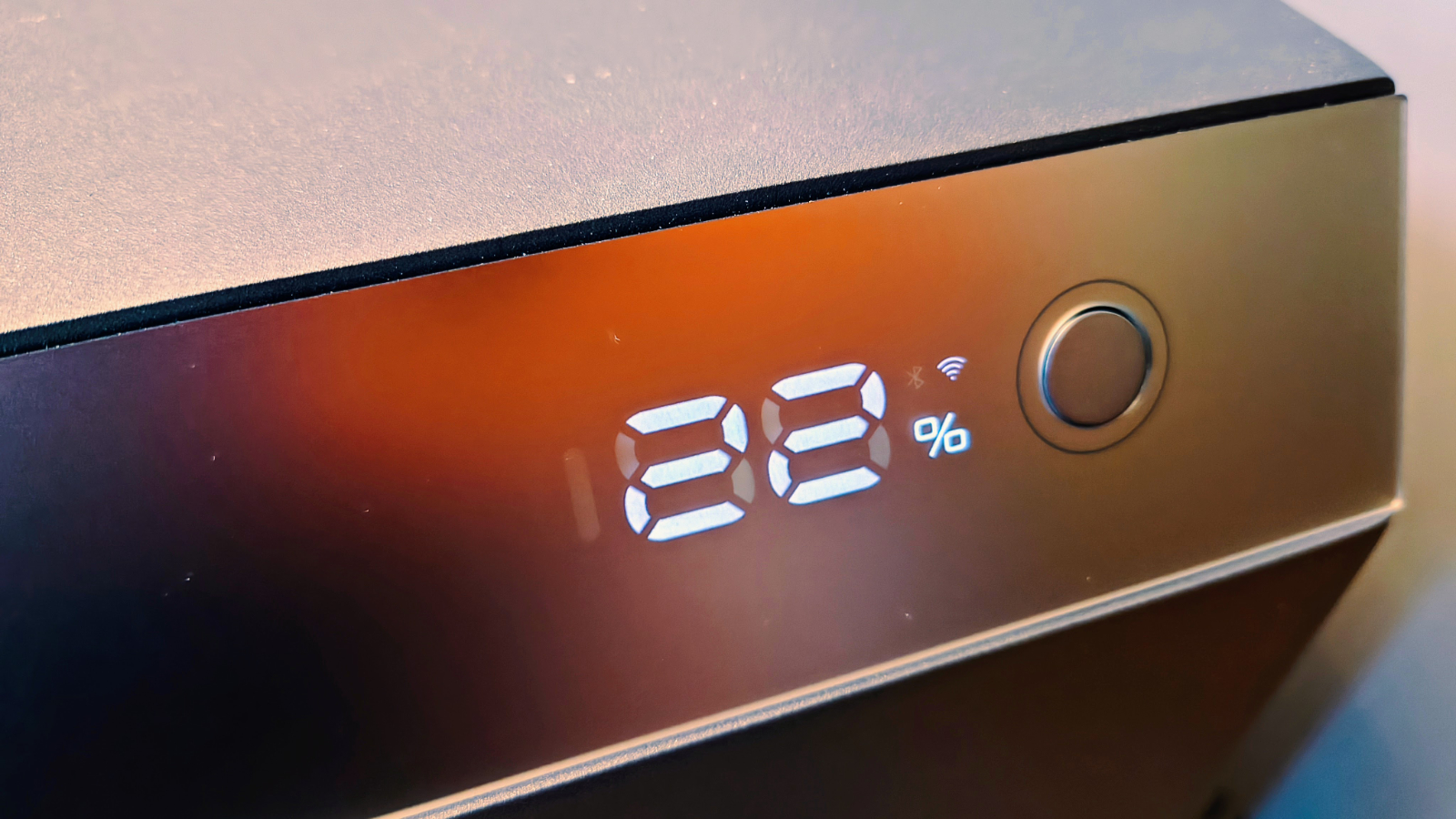
Therefore, a battery that heats itself before it charges in the cold is a very good idea in a British winter. EcoFlow says low-temperature charging kicks in below 10°C, and the small amount of power that it uses to stay warm makes the cells perform that much better.
The Stream AC 5000 is the same box without the solar inputs. That makes it slightly lighter, at 44.6 kg. It also makes it simpler.
Two things stand out from the Ultra X design. First, the solar side is far more generous. Four inputs at 1,250W each is serious capacity. Second, there is no longer any hint of a socket-in-the-wall approach. This is a unit for a wall bracket, a clean installation and a tidy cable run.
Here’s the breakdown of what each Stream model offers for comparison.
Swipe to scroll horizontally
|
Battery Capacity |
Solar Inputs |
Solar Input |
Max Expansion |
|
|---|---|---|---|---|
|
Stream 5000 |
5kWh |
4 |
5000W |
90kWh |
|
Stream 5000 AC |
5kWh |
N/A |
90kWh |
|
|
Stream Ultra X |
3.84kWh |
4 |
2000W |
22kWh |
|
Stream Ultra |
1.92kWh |
4 |
2000W |
12kWh |
|
Stream Pro |
1.92kWh |
3 |
1500W |
11.52kWh |
|
Stream AC Pro |
1.92kWh |
N/A |
11.52kWh |
|
|
Stream Max |
1.92kWh |
2 |
1000W |
N/A |
The older Stream and the new 5000 designs diverge massively in their interconnection philosophy. On the Stream Ultra X, there are two special inputs that were designed to couple the battery to the mains and to other batteries, in an up-and-down chain.
But the Stream 5000 and its AC brother only have one of these connections, and EcoFlow subtly changed the design so you can hook up prior batteries using the same cable.
The single port on the 5000 is meant to connect it directly to a consumer unit or power gateway, and the batteries stack vertically to integrate electrically.
With just a single unit, unless you are concerned about theft, the bracket isn’t needed, but should you buy additional battery capacity that is added under the Stream 5000 to create a stack, using the bracket would be advisable to stabilise the assembly.
So how do you mix and match older hardware? Well, when you add a Stream 5000 to an existing solution, the EcoFlow software detects the new hardware and defines a ‘system’ where the independent parts work in unison. It’s not necessary for the older batteries to be physically connected to be used, and that also allows them to have their own rules regarding discharge and recharge.
One other change worth noting is that the Ultra X had two AC outputs, whereas the Stream 5000 has just one. But the total power delivery of the Ultra X over AC was only 1200W, and 2300W if you cabled two units together. But the single AC port on the Stream 5000 can output 2500W, making it much more useful.
- Design: 4 / 5
EcoFlow Stream 5000: Features
- 5000W of solar input
- Ten-year warranty
- Up to 90 kWh
Initially, I assumed the solar inputs on the Stream 5000 would be the same as those on the Ultra X, but they aren’t.
On the Ultra X, each MPPT port could handle 500W and a maximum of 14A and 60V, with all four handling a maximum of 2000W, or about four 500W solar panels.
These specifications got a major overhaul on the Stream 5000, with each MPPT capable of accepting 1250W, 40A and 60V of input. Therefore, you can much more easily connect solar panels in series without overloading the system.
For testing, EcoFlow sent me two SUNPRO 500W panels with a maximum voltage of 33.38V and a maximum current of 14.98A. I couldn’t connect those panels to the Ultra X because of the amps limit, but I could connect them to the Stream 5000. And using a parallel configuration where the amps double but the volts stay the same, I could hook at least two of these to each MPPT pair.
Looking at these numbers, the sweet spot for panels on the Stream 5000 is 400W or 200W panels with an arrangement where the total watts is less than 1250W, under 40 amps, and volts are under 60. EcoFlow sells a 400W rigid solar panel which is rated at 13.79A and 37.1V, and each MPPT on the Stream 5000 could handle three of those in parallel, to hit 1200W of solar input in total, and 4800W in total with all four MPPTs used with 12 panels.
The panels cost about £150 each, so the panel investment would be £1800, but on a sunny day the system should be able to fully recharge the Stream 5000 in around 90 minutes.
That’s a game changer, certainly, but probably even more significant is the 3,000W output to the grid.
The Ultra X could manage 2,300W on its sockets, but only 800W back into the house.
Having given up the pretence that this is a plug-in solution, although you can run it plugged in with 800W output, either directly wired or via a gateway, this unit can output 3000W into the home electrical system.
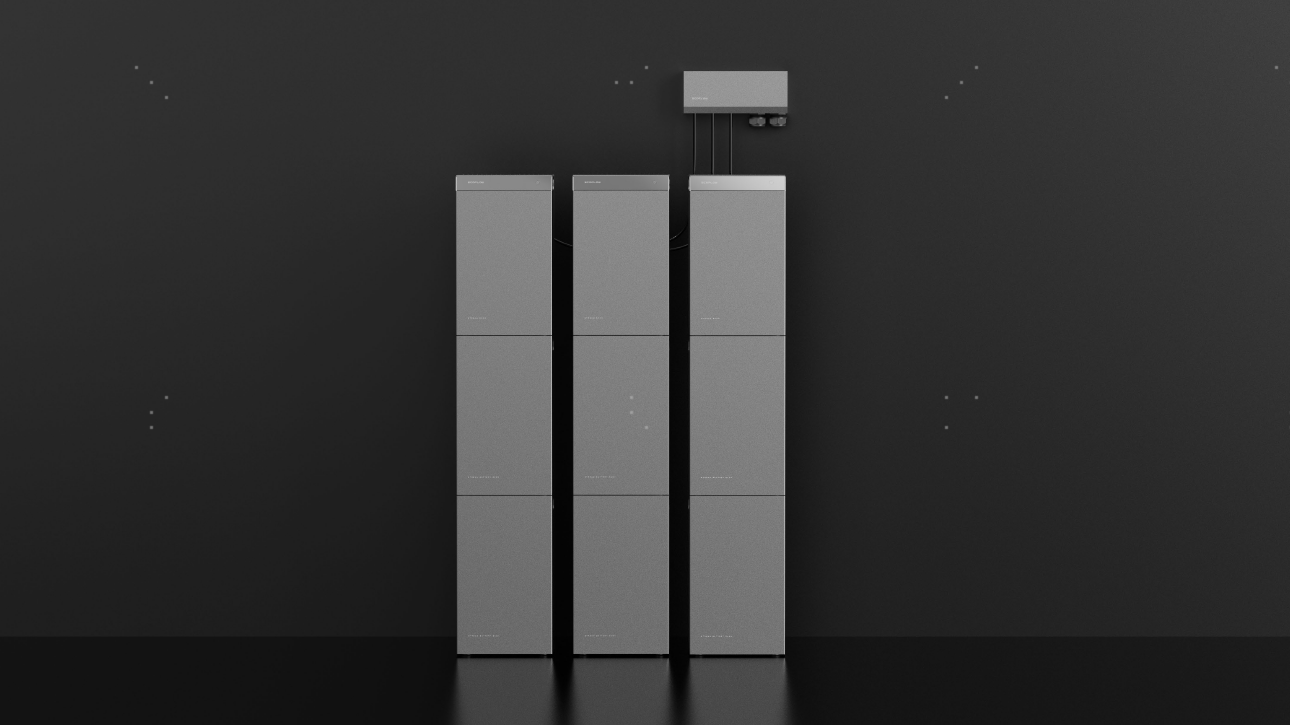
There is, however, a condition. EcoFlow says the full 3,000W needs sign-off by an approved installer, or a connection to a Stream Gateway. Without either, expect 800W, just like the Ultra X.
The battery chemistry is LFP, as before. EcoFlow claims up to 10,000 cycles and a life of up to 15 years. That is a big jump over the Ultra X, which was rated for 6,000 cycles to 70 per cent capacity. The warranty remains ten years, but the chemistry of LFP should still offer 60% of the capacity after 10,000 cycles.
For those curious, 10,000 cycles equals 27 years of daily use. This unit is meant to have a product life of around fifteen years, according to EcoFlow, so two full recharge and discharge cycles per day.
EcoFlow has been smart about expansion. The new unit works with the previous generation of Stream products. That means anyone who bought an Ultra X can add a Stream 5000 later, up to a claimed 90 kWh in total. A 5 kWh expansion battery is also available, and for larger systems the Stream Gateway handles the supervision. EcoFlow says it can cope with an EV charger and heat pump too. I don’t have the gateway, an EV charger or a heat pump, but there is clearly some headroom in this system before you need to consider EcoFlow’s Ocean range.
Software is the other half of the story. The EcoFlow app is still the best in this part of the market. It tracks usage, tariffs, and forecasts, and adjusts the battery accordingly. A new Local Mode was released in September, which should keep the system running and controllable if the internet drops.
- Features: 4.5 / 5
EcoFlow Stream 5000: User Experience
- A great app now with free AI
- Get an electrician
- Add Solar later
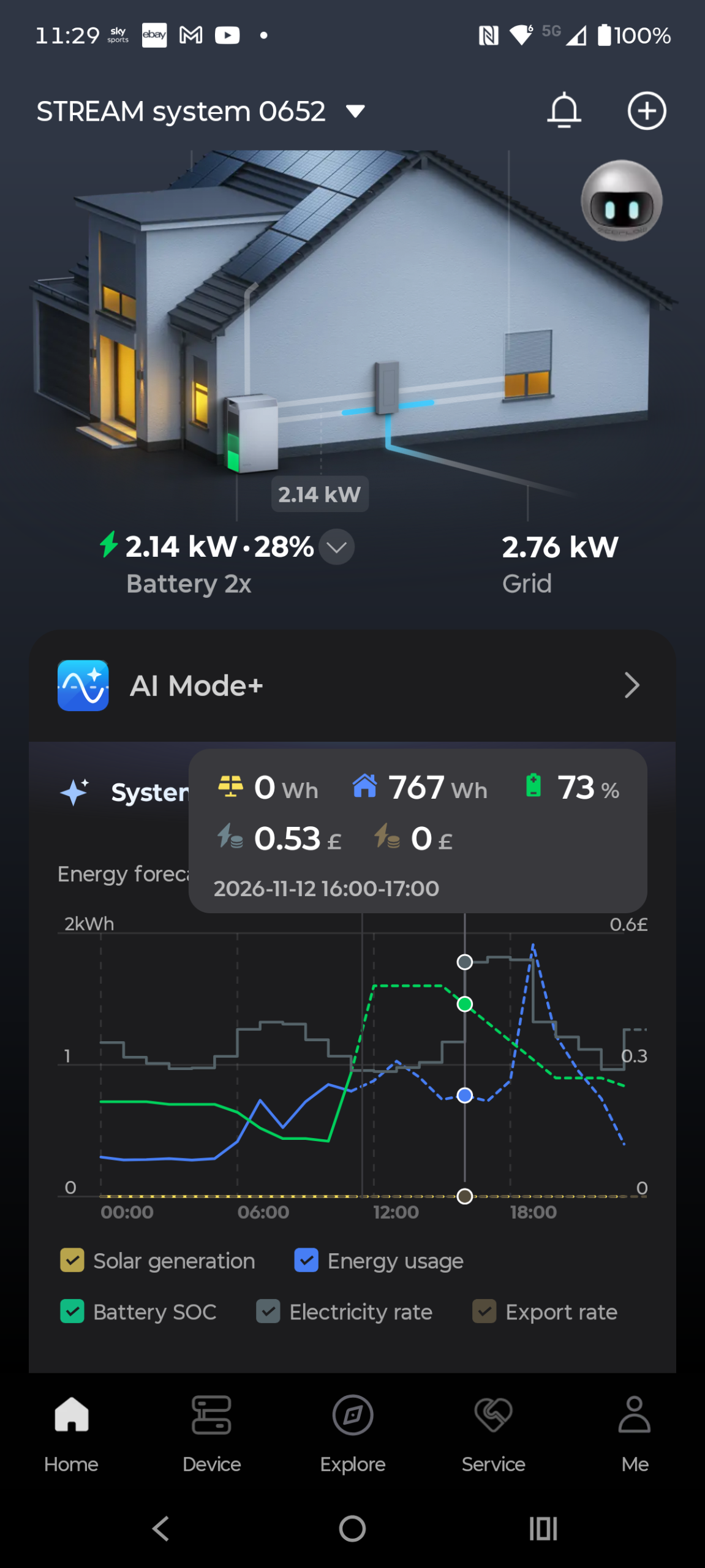
My usual disclaimer applies. I am not an electrician. Anything here about wiring is my understanding, not a rule, or anything you can take to an insurer after your house burns down.
The key difference from the Ultra X is that EcoFlow is upfront about this. It says the Stream 5000 is professionally installed. There is no pretence of a plug-in option, and there is none of the grey area I had to wade through last time.
That also matches where the law is heading. Plug-in solar has become legal in the UK from 27 August, but the new rules do not cover batteries. You still cannot simply connect a battery to a spare three-pin socket and start storing energy.
Well, you can, but it wouldn’t be covered by current regulations.
Installation is relatively painless if you are a qualified electrician, which I’m not, and involves wiring the provided cable into a fused spur connected to a bi-directional RCD in the consumer unit.
I already had this facility in place from my Ultra X installation, but even if they look the same, they’re subtly different, and I also wanted to retain my two Ultra Xs, so I had an electrician make the changes.
The cost of doing that can vary massively, and is highly dependent on how old your consumer unit is. Before I got the Ultra X, I had an old consumer unit where circuits didn’t have their own dedicated RCDs, but I had that swapped out for a new design where each has an RCD, making this installation much easier and within regulations.
Once everything was wired, the EcoFlow Stream 5000 and both of my EcoFlow Ultra X units wanted firmware updates. And, after those changes were made, the EcoFlow mobile app registered lots of changes and new items which weren’t there previously.
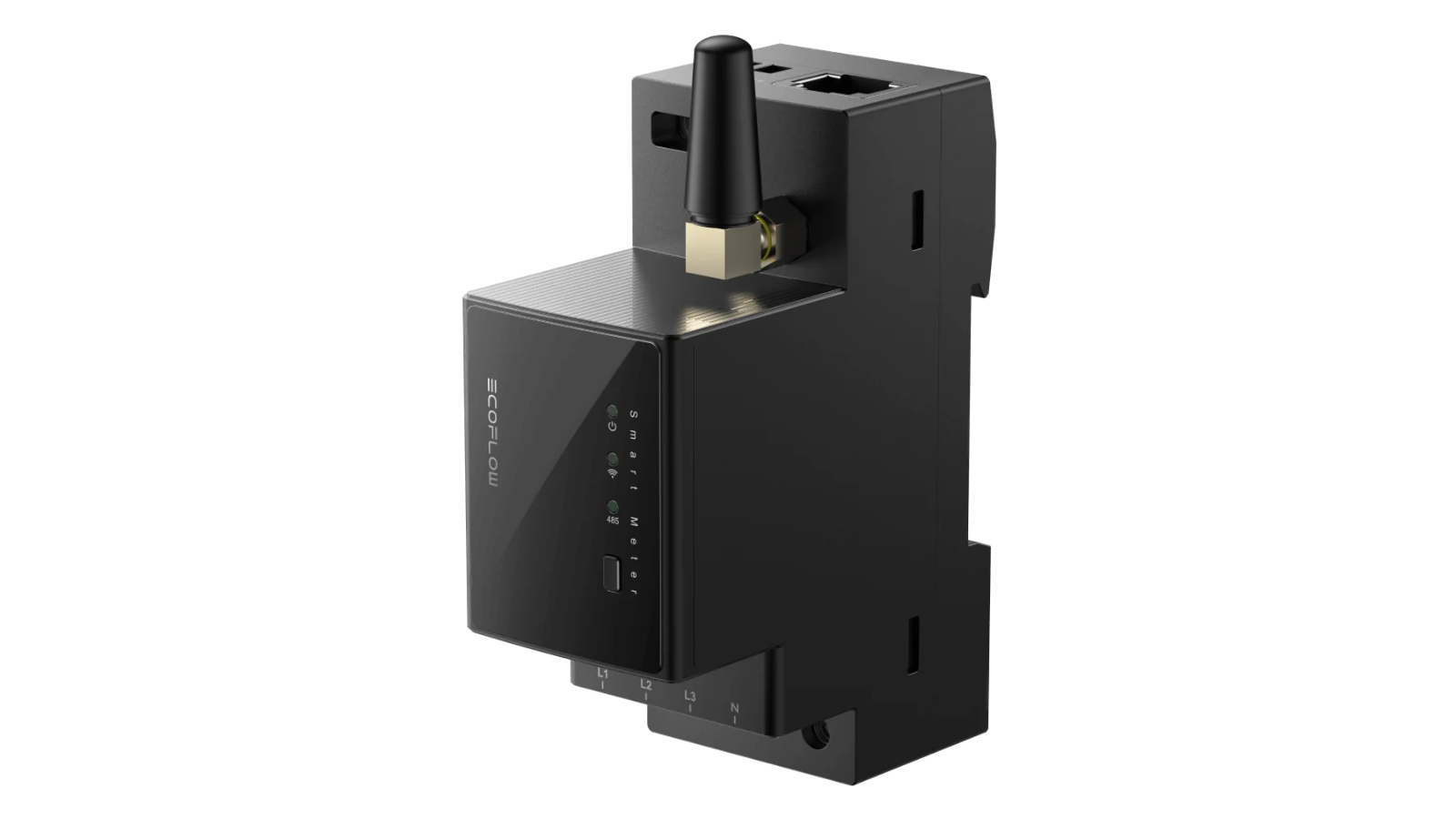
With the Stream 5000 at the helm, the hardware was reorganised around a defined ‘system’ where the Ultra X hardware was merged into the collective solution. Although not physically tied to anything but the house electrics, this allowed the battery capacity across all three batteries to be synced, providing a system of approximately 12,5 kWH.
There are lots of minor changes in the app, but the one that most interested me was that where it used to need a subscription, the AI+ functions are now included for free. In theory, this should mean I can let AI decide when to charge and discharge each day, without having to guess. If you have spare time and love to tinker, then you aren’t forced to use it.
Like the Ultra X, the Stream 5000 follows anti-islanding rules. If the mains fail, it must stop feeding the property to avoid sending electricity to the grid, where someone might be working to restore power.
Those who want a fail-over mode where the home switches to internal power need to consider installing a gateway with that capability. However, the Stream 5000, even with a gateway, can only output 3000W of power, so you need to be careful about the loads if you are cooking.
There is a UPS mode that automatically kicks on the AC power during a power loss, but it can only output 2500W. There is a local mode now, but that’s only for when the internet fails, not the power grid.
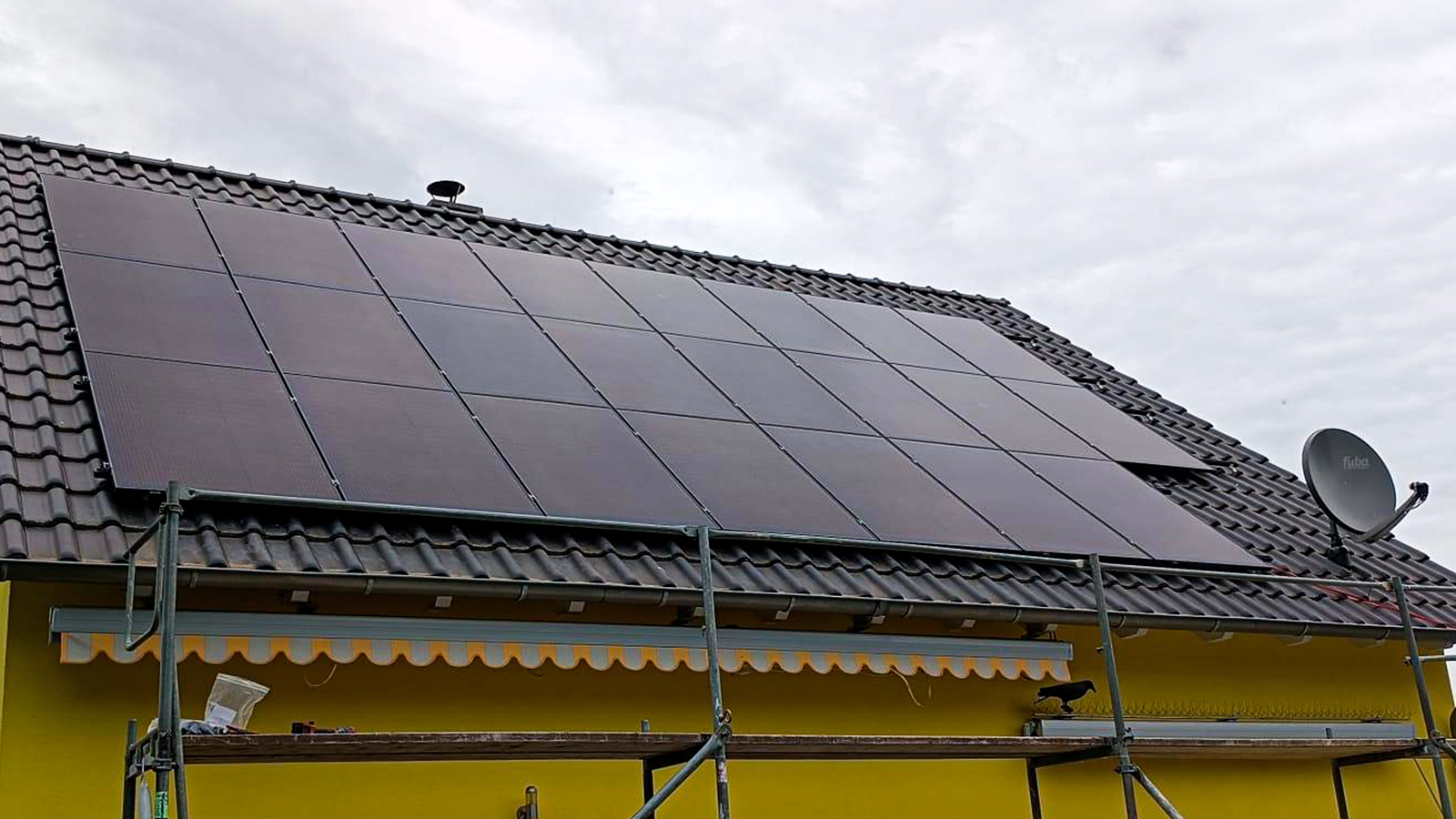
My system is missing solar, but the plans are in place, and the Stream 5000 is a big part of that. With the solar input on that unit, combined with those on my two Stream Ultra X devices, I have 12 inputs and the potential for 9000W of solar once I’ve deployed the panels to achieve that.
This is where the Stream 5000 becomes a critical component in this scheme. Five kilowatts of solar input means a decent roof array is on the table, and a larger array means more free power, and the 12.5 kWh of total batteries is big enough to carry my household through the more expensive times of the day.
My total daily usage is around 16 kWh, so that’s enough to consider exporting some to the grid between 4 pm and 7 pm, and I’ll certainly consider that once my solar panels are in place.
- User Experience: 4 / 5
EcoFlow Stream 5000: Final verdict
The Ultra X was a clever product held back by a regulatory grey area. Or rather, the government went soft on the plug-in part of the deal just before the regulations changed, unhelpfully.
EcoFlow has stopped trying to sell a home battery as a plug-in gadget. With the Stream 5000, it has built a compact, quiet, well-specified battery that does the job properly. It then priced it attractively and designed it to grow. It also works with the earlier Stream range to an extent, which is a nice touch for anyone who has already bought in, like me.
The weaknesses are few, but I need to mention them. It is heavy, needs an electrician to install it safely, and that adds to the cost. And if you want the whole house to stay on during a blackout, then this probably isn’t the right equipment for you, even with a gateway.
If you want a plug-in system with no electrician involved, none of this applies, and the Ultra X era products remain the nearest fit, with their own caveats. For everyone else, this is the better battery.
My only concern is that the leap from the Ultra X to the 5000 took less than a year, and what EcoFlow will release a year from now. I’m hoping their new compact model doesn’t change dramatically, and that we get a larger 10 kWh extra battery, or the 3 kWh pack mentioned at launch.
The arrival of the Stream 5000 could have made all my previous investments redundant, but it hasn’t. And, given how much of it EcoFlow has sold, the brand seems determined to keep customers on board with each new release. Which, considering how some others operate in the tech space, is a breath of fresh air.
EcoFlow Stream 5000: Report card
Swipe to scroll horizontally
|
Value |
Excellent cost per kWh, before installation |
4.5 / 5 |
|
Design |
Compact for its capacity, but heavy |
4 / 5 |
|
Features |
Big solar input, strong expansion and more power output |
4.5 / 5 |
|
User Experience |
Easy to configure and now has AI management |
4 / 5 |
|
Overall |
The best got even better in most respects |
5 / 5 |
Should I buy a EcoFlow Stream 5000?
Buy it if…
You want a proper home battery without a giant price tag
At about £320 per kWh before installation, it undercuts most of the market, and it still comes with a ten-year warranty.
You plan to add solar
Five kilowatts of solar input and four independent trackers give you room to grow. You can start with the battery and add panels later.
You already own Stream kit
It works with the previous generation, so you can expand an existing system rather than start again.
Don’t buy it if…
You want plug-and-play
This is not that. It needs a qualified installer, and the UK rules are clear that plug-in batteries are not yet covered.
You need a full home UPS
Check the specification carefully before you commit, because this system isn’t built to handle all electricity needs should the grid fail.
You have a tired old consumer unit
Budget for an upgrade. It is a cost that will not show up on the EcoFlow price tag, but you still need to pay it.

Mark is an expert on 3D printers, drones and phones. He also covers storage, including SSDs, NAS drives and portable hard drives. He started writing in 1986 and has contributed to MicroMart, PC Format, 3D World, among others.
You must confirm your public display name before commenting
Please logout and then login again, you will then be prompted to enter your display name.