



Remedy Entertainment has hit the nail on the head with making an engaging and addictive sequel to Control, with Control Resonant. Gameplay from the original concept has been taken into Resonant and dialled up to 11, and that’s heavily supported by Nvidia‘s technologies, enhancing the visual experience.
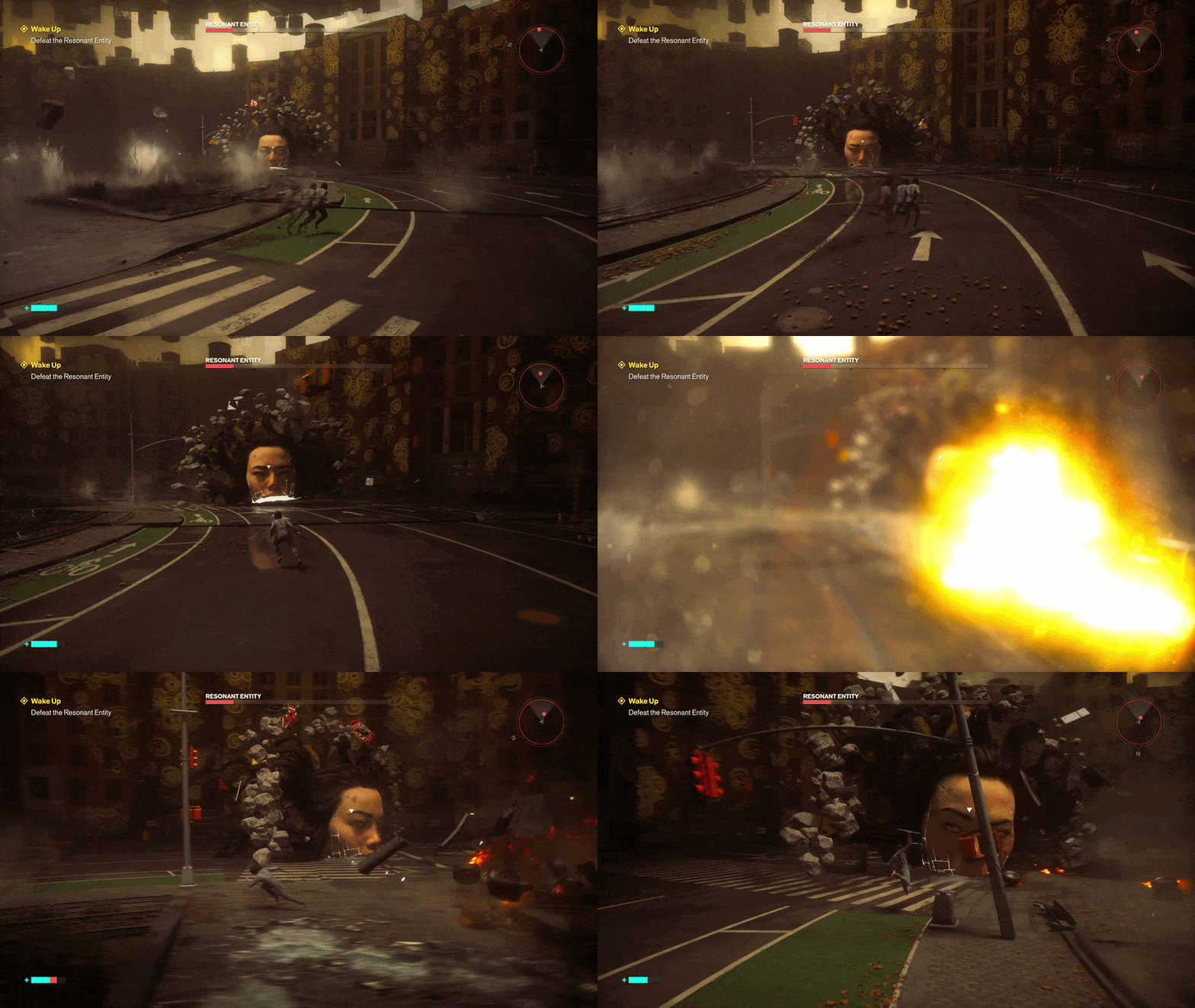
In my two hours playing, it didn’t take very long for me to become fully immersed in not only our new protagonist, Dylan, and his incredible maneuvers and special attacks, but most importantly, in this case, the fascinating environments indoors and outdoors — and yes, a lot of this is thanks to the heavy lifting of Nvidia’s ray tracing active during the demo.
Simply put, Resonant is an absolutely pleasant sight to the eyes, making every interior and exterior fight encounter blossom for greater immersion. It’s a very colorful game, where enemy designs or attacks can shine bright in red (which isn’t a surprise since the Hiss is mostly red), and I was blown away by everything on display.
Resonant takes a strong shift away from the third-person action-shooter aspect and dives into third-person fast-paced action-role-playing game (RPG) elements, and while my time with it was short-lived, I can’t wait to see how its PC port handles later this year.
Resonant’s ray tracing is amazing, but slightly heavy to run
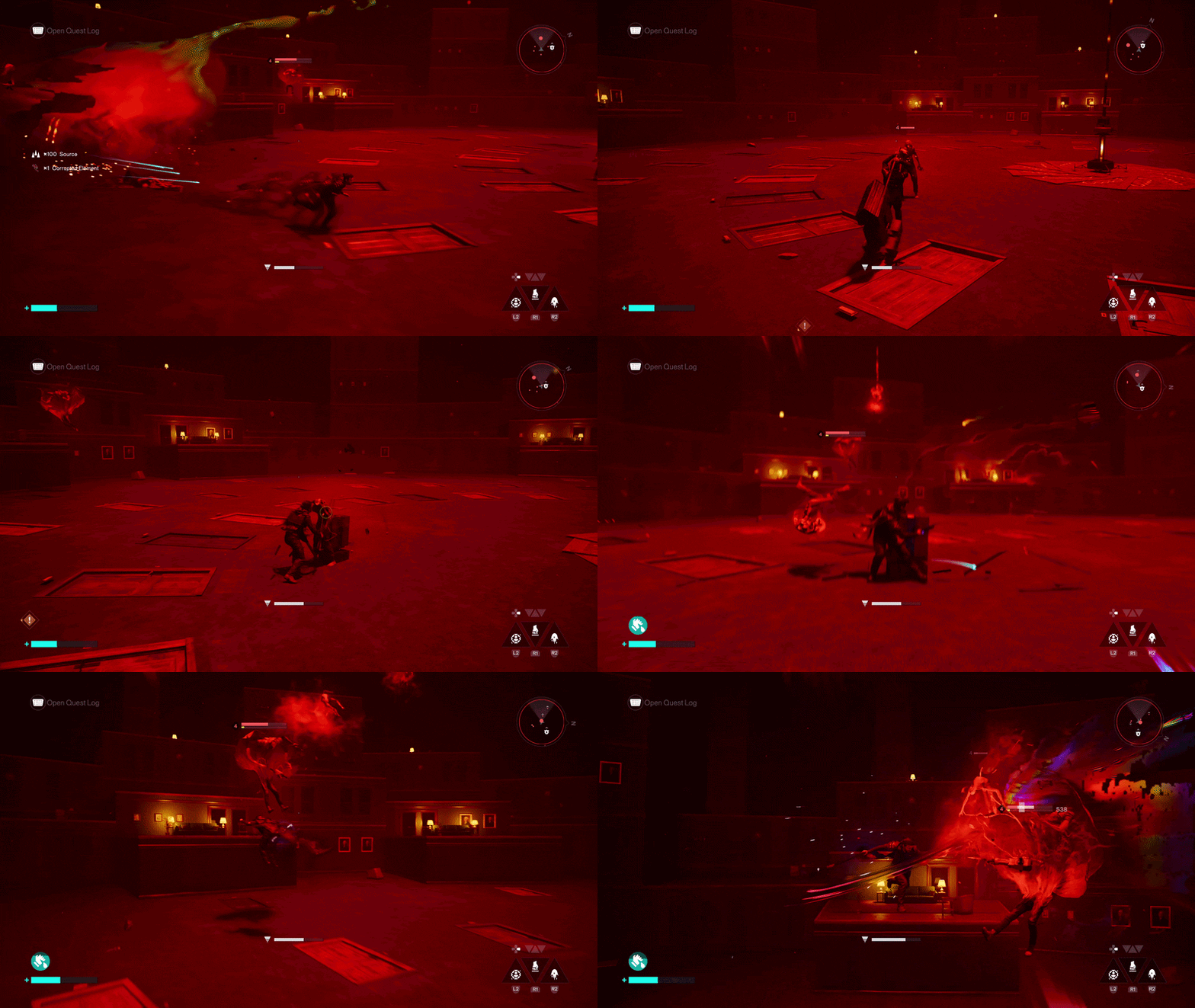
It shouldn’t come as a big surprise, but Control Resonant uses Nvidia’s ray tracing technology and DLSS Ray Reconstruction, and the former is a huge demand for any RTX GPU.
Using an RTX 5090 at 4K with DLSS 4.5 Performance enabled and ray tracing preset on high, Resonant felt smooth in most playable combat sections of the demo — and while there was no evident frame rate counter, I suspect it was mostly at or above 60 frames per second (fps).
I’m a massive fan of hack-and-slash games like Devil May Cry 5 and the original God of War trilogy, where 60 fps during combat is effectively a must, which Resonant is quite similar to; the point being, I can tell when frame rates dip under 60, and there were certainly a few occurrences where heavier dips below that figure were noticeable.
Swipe to scroll horizontally
|
Minimum |
Recommended |
|
|---|---|---|
|
OS |
Windows 10/11 64-bit |
Windows 10/11 64-bit |
|
CPU |
Intel Core i5-8500 or AMD equivalent |
AMD Ryzen 7 3700X or Intel equivalent |
|
GPU |
Nvidia GeForce GTX 1070 / AMD Radeon RX 5600 XT |
Nvidia GeForce RTX 3070 / AMD Radeon RX 6700 XT |
|
RAM |
16GB |
16GB |
However, this is an early build of the game, which is bound to be more polished once released, and high ray tracing presets still give the most powerful graphics card on the market a run for its money in any game (including Cyberpunk 2077 and Resident Evil Requiem).
Fortunately, DLSS 4.5 works wonders as usual. Using Performance mode on previous DLSS models wasn’t ideal, as ghosting and poor image quality were clear to see. DLSS 4.5’s Performance mode, on the other hand, features really sharp image quality that essentially outshines DLSS 4’s Quality mode and can be compared to DLSS 4.5’s Quality mode.
The downside of DLSS 4.5 is the performance loss (compared to DLSS 4), particularly on RTX 3000 and 2000 series GPUs, but considering how impressive Resonant is visually using ray tracing, it’s worth using DLSS 4.5 Performance where possible.
Bear in mind, this demo wasn’t using DLSS Frame Generation, and based on early system requirements, Resonant should run great on a wide range of hardware. There will be some systems that can’t handle ray tracing or full path tracing, which should be expected, but even without those elements, it’s still a very impressive game visually.
There’s still plenty left for me to see in Resonant, a sequel that has taken its environments and locations to new levels entirely.
With that being said, I’m anticipating even more highly detailed areas to explore and enjoy using a less powerful but capable RTX 4080 Super for high ray tracing or full path tracing — and I’ll certainly be playing when it launches on September 24, 2026, on PS5, Xbox Series X, Xbox Series S, and PC.

Follow TechRadar on Google News and add us as a preferred source to get our expert news, reviews, and opinion in your feeds.