


Alison Francis
Senior Science Journalist
NASA/Goddard/University of Arizona
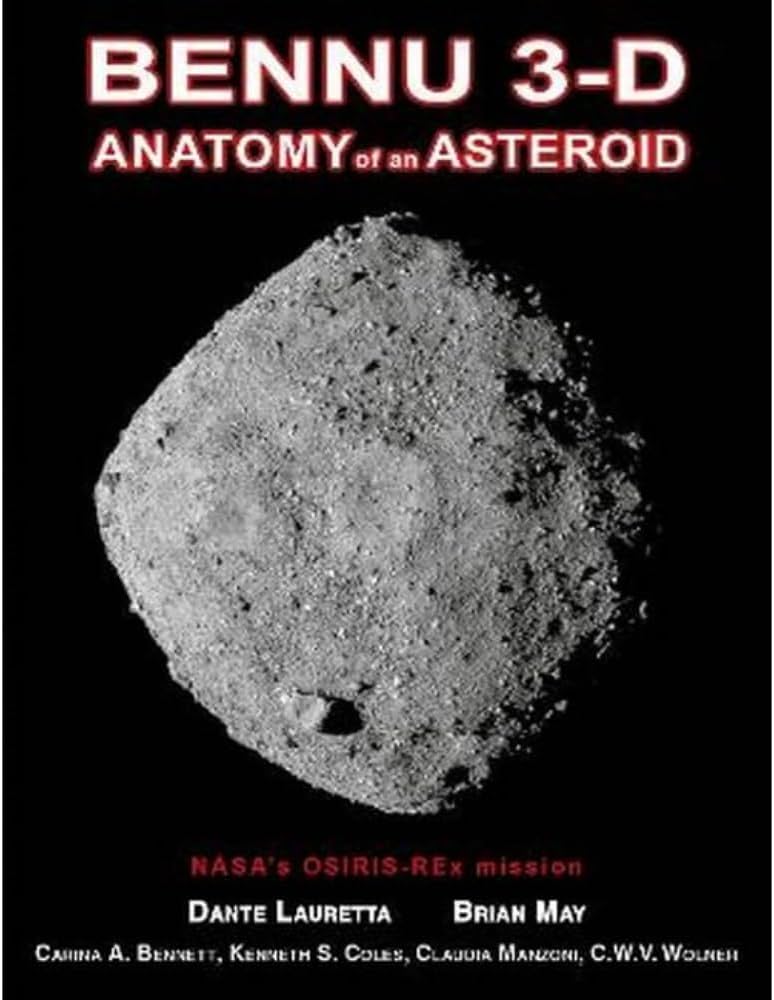
Asteroid Bennu is a 500m-wide pile of boulders, rocks and rubble
The chemical building blocks of life have been found in the grainy dust of an asteroid called Bennu, an analysis reveals.
Samples of the space rock, which were scooped up by a Nasa spacecraft and brought to Earth, contain a rich array of minerals and thousands of organic compounds.
These include amino acids, which are the molecules that make up proteins, as well as nucleobases – the fundamental components of DNA.
This doesn’t mean there was ever life on Bennu, but it supports the theory that asteroids delivered these vital ingredients to Earth when they crashed into our planet billions of years ago.
Scientists think those same compounds could also have been brought to other worlds in our Solar System.
“What we’ve learned from it is amazing,” said Prof Sara Russell, a cosmic mineralogist from the Natural History Museum in London.
“It’s telling us about our own origins, and it enables us to answer these really, really big questions about where life began. And who doesn’t want to know about how life started?”
The findings are published in two papers in the journal Nature.
NASA/Erika Blumenfeld/Joseph Aebersold
The grains of Bennu contain a vast array of organic molecules
Grabbing a bit of Bennu has been one of the most audacious missions Nasa has ever attempted.
A spacecraft called Osiris Rex unfurled a robotic arm to collect some of the 500m-wide space rock, before packing it into a capsule and returning it to Earth in 2023.
About 120g of black dust was collected and shared with scientists around the world. This might not sound like much material, but it’s proved to be a treasure trove.
“Every grain is telling us something new about Bennu,” said Prof Russell, who’s been studying the tiny specks.
About a teaspoonful of the asteroid was sent to scientists in the UK.
Natural History Museum/Tobias Salge
Scanning electron microscopes revealed the minerals in the Bennu sample
The new research has shown that the space rock is packed full of nitrogen and carbon-rich compounds.
These include 14 of the 20 amino acids that life on Earth uses to build proteins and all four of the ring-shaped molecules that make up DNA – adenine, guanine, cytosine and thymine.
The study has also found an array of minerals and salts, suggesting water was once present on the asteroid. Ammonia, which is important for biochemical reactions, was discovered in the sample too.
Some of these compounds have been seen in space rocks that have fallen to Earth, but others haven’t been detected until now.
“It’s just incredible how rich it is. It’s full of these minerals that we haven’t seen before in meteorites and the combination of them that we haven’t seen before. It’s been such an exciting thing to study,” said Prof Russell.
This latest study adds to growing evidence that asteroids brought water and organic material to Earth.
“The early Solar System was really turbulent and there were millions of asteroids like Bennu flying about,” explained Dr Ashley King, from the Natural History Museum.
The idea is that these bombarded the young Earth, seeding our planet with ingredients that gave us the oceans and made life possible.
But Earth wasn’t the only world getting hit by space rocks. Asteroids would have been colliding with other planets too.
“Earth is unique, in that it’s the only place where we have found life so far, but we know asteroids were delivering those ingredients, the carbon and the water, throughout the Solar System,” said Dr King.
“And one of the big things that we’re trying to understand now is, if you have the right conditions, why do we have life here on Earth – and could we potentially find it elsewhere in our Solar System?”
It’s a key question that scientists will continue to try and answer.
They have decades of research ahead on the dust brought back from Bennu, and parts of our cosmic neighbourhood still to explore.