
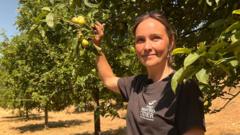

Walking through Kimberly Jones’ orchard just outside Bath, it’s hard to see any apples at all. The trees should be groaning with fruit, she tells me, but “we might get 10% of our normal crop here, and that’s generous”.
The orchard is 25 years old, and this is by far the driest year they have had. Because 2025 was also dry, the trees became stressed, she explained, and this year most have just not made fruit at all, to save their energy.
Unlike the big commercial brands, Honey’s Cider is only made from fresh juice. Jones refuses to buy apple concentrate or industrial products.
“So we can only make cider from the juice we make each year, which means we will be down this year,” she adds.
Ironically, the long hot summer has been “brilliant” for actually selling cider.
“Everyone likes a cold cider on a hot day, but we are struggling now to grow fruit for next year,” Jones says.
Somerset’s cider apple growers know this is not a freak year.
“What we used to think of as extreme weather, we increasingly consider as normal.” says Mike Kendon, a climate scientist at the Met Office.
But what can an apple grower do about it?
Neil MacDonald is now watering newly planted trees.
“Five years ago you would just dig a good hole and leave nature to get on with it,” he smiles.
“Now you can’t get away with that, you have to irrigate young trees or they die.”
But irrigation for hundreds of acres of cider orchards is “just not viable”, he said. Farmers who grow eating apples for supermarkets command higher prices for their fruit, so traditionally they have invested in irrigation systems.
Cider growers are now having to rethink their calculations.
Most fundamentally of all, climate change may actually change the taste of West Country cider.
One of the main varieties that gives Somerset cider its bittersweet taste is Dabinett. Several growers have found these trees producing very few apples this year, not because of the drought, but the mild winter.
“Dabinett needs a cold snap,” MacDonald explains. “We just didn’t get the cold winter days this year or last, so it’s not producing.”
He is now grafting other varieties onto his Dabinett trees, plants that fare better in hot dry weather.
As our climate changes, the very taste of Somerset cider may change too.