


Justin RowlattClimate Editor
AFP via Getty Images
Renewable energy overtook coal as the world’s leading source of electricity in the first half of this year – a historic first, according to new data from the global energy think tank Ember.
Electricity demand is growing around the world but the growth in solar and wind was so strong it met 100% of the extra electricity demand, even helping drive a slight decline in coal and gas use.
However, Ember says the headlines mask a mixed global picture.
Developing countries, especially China, led the clean energy charge but richer nations including the US and EU relied more than before on planet-warming fossil fuels for electricity generation.
Coal, a major contributor to global warming, was still the world’s largest individual source of energy generation in 2024, a position it has held for more than 50 years, according to the International Energy Agency.
China remains way ahead in clean energy growth, adding more solar and wind capacity than the rest of the world combined. This enabled the growth in renewable generation in China to outpace rising electricity demand and helped reduce its fossil fuel generation by 2%.
India experienced slower electricity demand growth and also added significant new solar and wind capacity, meaning it too cut back on coal and gas.
In contrast, developed nations like the US, and also the EU, saw the opposite trend.
In the US, electricity demand grew faster than clean energy output, increasing reliance on fossil fuels, while in the EU, months of weak wind and hydropower performance led to a rise in coal and gas generation.
Getty Images
‘Crucial’ turning point
Despite these regional differences, Ember calls this moment a “crucial turning point”.
Ember senior analyst Malgorzata Wiatros-Motyka said it “marks the beginning of a shift where clean power is keeping pace with demand growth”.
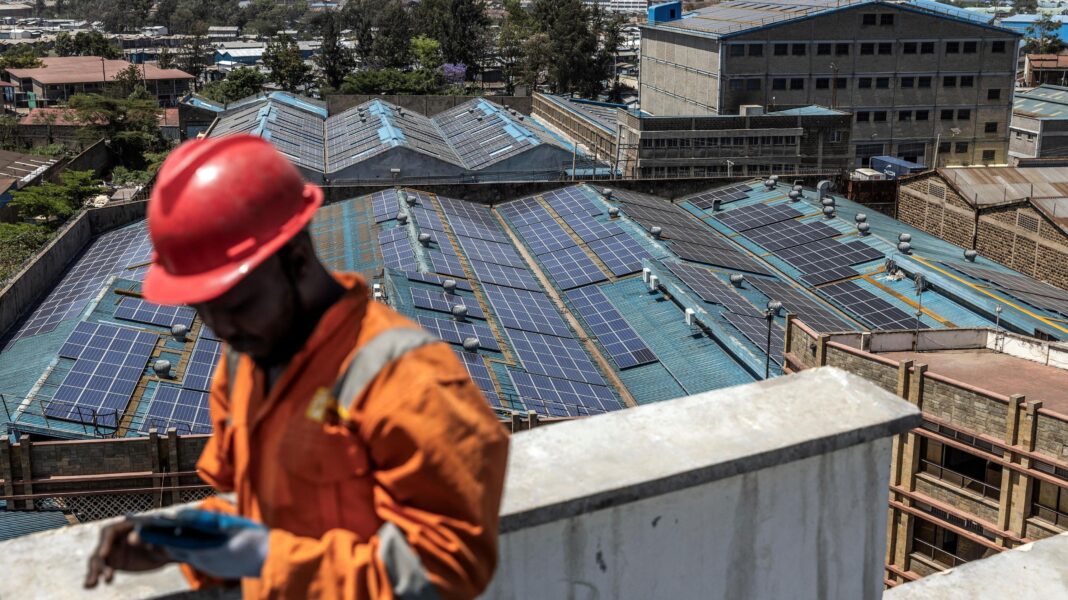
Solar power delivered the lion’s share of growth, meeting 83% of the increase in electricity demand. It has now been the largest source of new electricity globally for three years in a row.
Most solar generation (58%) is now in lower-income countries, many of which have seen explosive growth in recent years.
That’s thanks to spectacular reductions in cost. Solar has seen prices fall a staggering 99.9% since 1975 and is now so cheap that large markets for solar can emerge in a country in the space of a single year, especially where grid electricity is expensive and unreliable, says Ember.
Pakistan, for example, imported solar panels capable of generating 17 gigawatts (GW) of solar power in 2024, double the previous year and the equivalent of roughly a third of the country’s current electricity generation capacity.
Africa is also experiencing a solar boom with panel imports up 60% year on year, in the year to June. Coal-heavy South Africa led the way, while Nigeria overtook Egypt into second place with 1.7GW of solar generating capacity – that’s enough to meet the electricity demand of roughly 1.8m homes in Europe.
Some smaller African nations have seen even more rapid growth with Algeria increasing imports 33-fold, Zambia eightfold and Botswana sevenfold.
In some countries the growth of solar has been so rapid it is creating unexpected challenges.
In Afghanistan, widespread use of solar-powered water pumps is lowering the water table, threatening long-term access to groundwater. A study by Dr David Mansfield and satellite data firm Alcis warns that some regions could run dry within five to ten years, endangering millions of livelihoods.
Adair Turner, chair of the UK’s Energy Transitions Commission, says countries in the global “sun belt” and “wind belt” face very different energy challenges.
Sun belt nations – including much of Asia, Africa, and Latin America – need large amounts of electricity for daytime air conditioning. These countries can significantly reduce energy costs almost immediately by adopting solar-based systems, supported by increasingly affordable batteries that store energy from day to night.
Wind belt countries like the UK face tougher obstacles, however. Wind turbine costs have not come down by anything like as much as solar panels – down just a third or so in the last decade. Higher interest rates have also added to borrowing costs and raised the overall price of installing wind farms significantly in the last few years.
Balancing supply is harder too: winter wind lulls can last for weeks, requiring backup power sources that batteries alone can’t provide – making the system more expensive to build and run.
But wherever you are in the world, China’s overwhelming dominance in clean tech industries remains unchallenged, other new data from Ember shows.
In August 2025, its clean tech exports hit a record $20bn, driven by surging sales of electric vehicles (up 26%) and batteries (up 23%). Together, China’s electric vehicles and batteries are now worth more than twice the value of its solar panel exports.