

By GEIR MOULSON
Updated [hour]:[minute] [AMPM] [timezone], [monthFull] [day], [year]
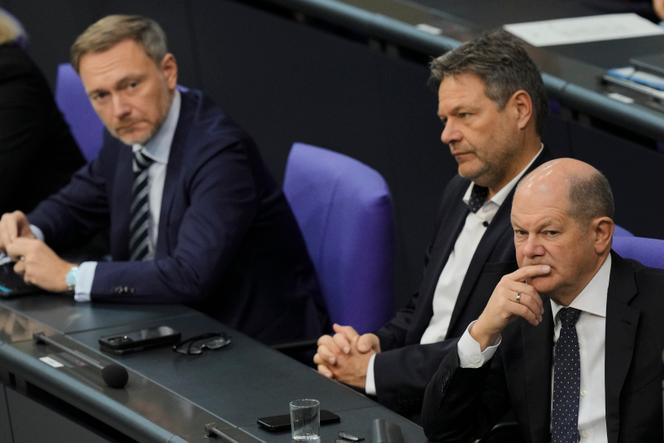
BERLIN (AP) — Chancellor Olaf Scholz lost a confidence vote in the German parliament on Monday, putting the European Union’s most populous member and biggest economy on course to hold an early election in February.
Scholz won the support of 207 lawmakers in the 733-seat lower house, or Bundestag, while 394 voted against him and 116 abstained. That left him far short of the majority of 367 needed to win.
Scholz leads a minority government after his unpopular and notoriously rancorous three-party coalition collapsed on Nov. 6 when he fired his finance minister in a dispute over how to revitalize Germany’s stagnant economy. Leaders of several major parties then agreed that a parliamentary election should be held on Feb. 23, seven months earlier than originally planned.
The confidence vote was needed because post-World War II Germany’s constitution doesn’t allow the Bundestag to dissolve itself. Now President Frank-Walter Steinmeier has to decide whether to dissolve parliament and call an election.
Steinmeier has 21 days to make that decision — and, because of the planned timing of the election, is expected to do so after Christmas. Once parliament is dissolved, the election must be held within 60 days.
In practice, the campaign is already well underway, and Monday’s three-hour debate reflected that.
What did the contenders say? Scholz, a center-left Social Democrat, told lawmakers that the election will determine whether “we, as a strong country, dare to invest strongly in our future; do we have confidence in ourselves and our country, or do we put our future on the line? Do we risk our cohesion and our prosperity by delaying long-overdue investments?”
Scholz’s pitch to voters includes pledges to “modernize” Germany’s strict self-imposed rules on running up debt, to increase the national minimum wage and to reduce value-added tax on food.
Center-right challenger Friedrich Merz responded that “you’re leaving the country in one of its biggest economic crises in postwar history.”
“You’re standing here and saying, business as usual, let’s run up debt at the expense of the younger generation, let’s spend money and … the word ‘competitiveness’ of the German economy didn’t come up once in the speech you gave today,” Merz said.
The chancellor said Germany is Ukraine’s biggest military supplier in Europe and he wants to keep that up, but underlined his insistence that he won’t supply long-range Taurus cruise missiles, over concerns of escalating the war with Russia, or send German troops into the conflict. “We will do nothing that jeopardizes our own security,” he said.
Merz, who has been open to sending the long-range missiles, said that “we don’t need any lectures on war and peace” from Scholz’s party. He said, however, that the political rivals in Berlin are united in an “absolute will to do everything so that this war in Ukraine ends as quickly as possible.”
What are their chances?Polls show Scholz’s party trailing well behind Merz’s main opposition Union bloc, which is in the lead. Vice Chancellor Robert Habeck of the environmentalist Greens, the remaining partner in Scholz’s government, is also bidding for the top job — though his party is further back.
The far-right Alternative for Germany, which is polling strongly, has nominated Alice Weidel as its candidate for chancellor but has no chance of taking the job because other parties refuse to work with it.
Germany’s electoral system traditionally produces coalitions, and polls show no party anywhere near an absolute majority on its own. The election is expected to be followed by weeks of negotiations to form a new government.
Confidence votes are rare in Germany, a country of 83 million people that prizes stability. This was only the sixth time in its postwar history that a chancellor had called one.
The last was in 2005, when then-Chancellor Gerhard Schröder engineered an early election that was narrowly won by center-right challenger Angela Merkel.